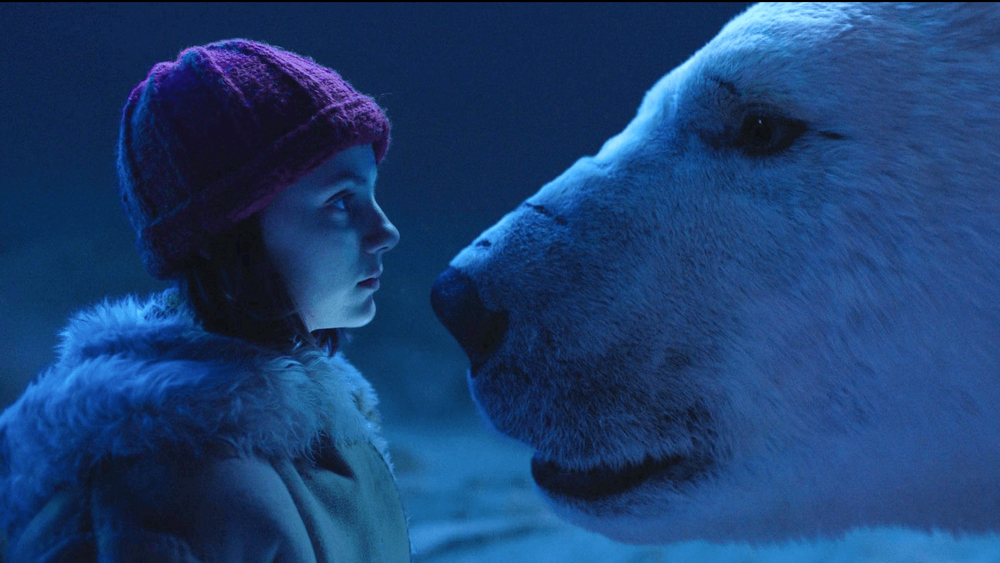
The Inside Track: Editor David Fisher on his workflow for optimum storytelling
The Inside Track: Editor David Fisher on his workflow for optimum storytelling
Editor David Fisher speaks to Louper’s Founder & CEO, Alex Williams about how he tackles script when working with rushes, builds emotional depth through sound design, and uses Louper’s live-streaming to bring clarity to collaboration.
David Fisher ACE, BFE is an award-winning editor with over 20 years’ experience in the television and film industry, whose credits include Netflix's Run Away, Amazon Prime's Lazarus, HBO’s Pennyworth, His Dark Materials, BBC’s Doctor Who and the feature film Jackdaw, among others.
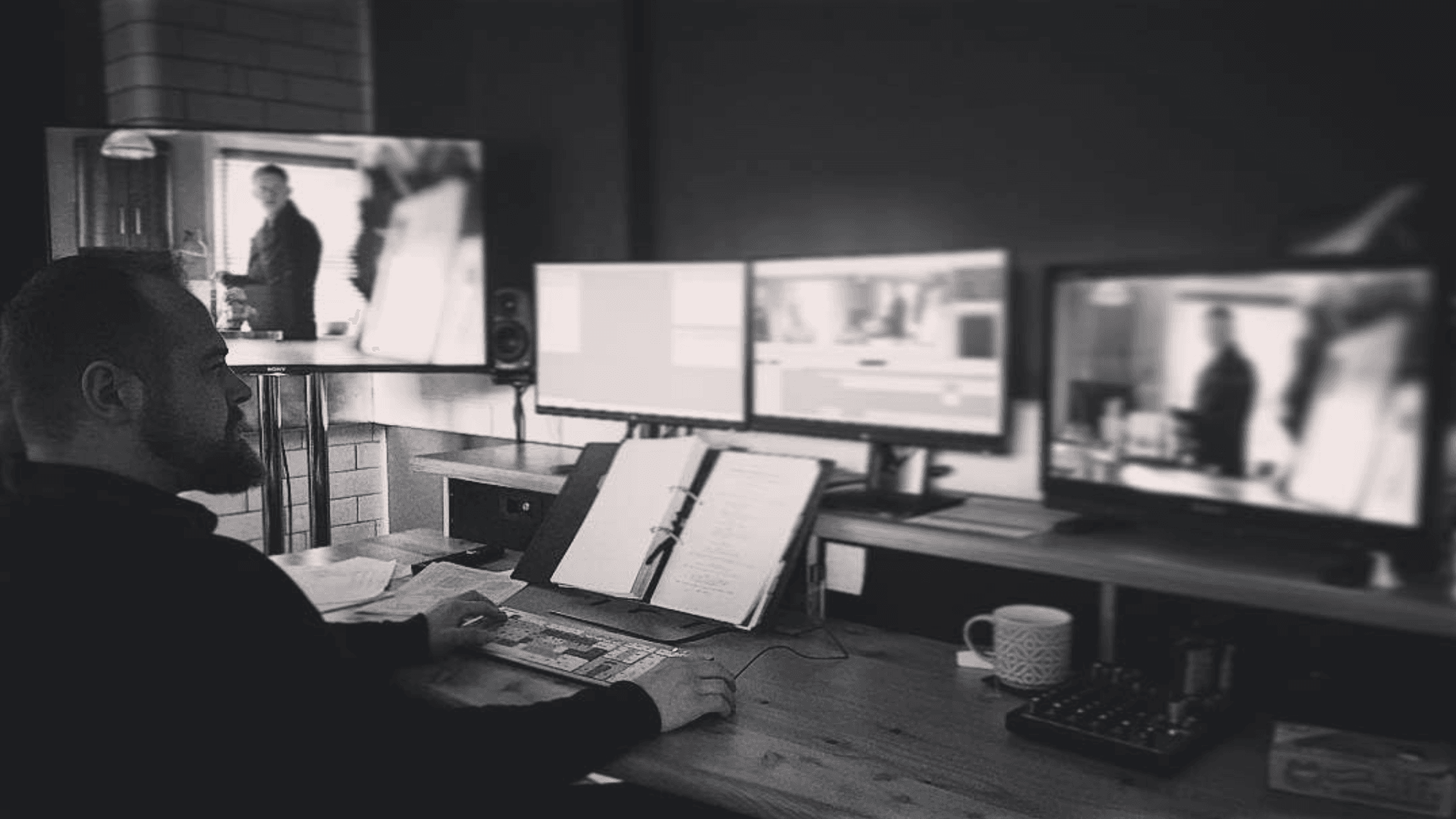
Editor David Fisher ACE, BFE in the cutting room
You were an editor on His Dark Materials. What was it like to cut a show that relied so heavily on visual effects?
Nearly every character had a Daemon, which was a CGI animal. So, they’d shoot the actors’ performance with either an empty plate or they’d do a puppet pass, depending on which option was best. If the empty plate was better for the actors’ performance, the pre-vis company Painting Practice would take the plate shot and add a wire-frame animation of the Daemon for us to use in the edit to get an idea of timings and the placement of the animal in relation to the other characters. But if there was any kind of practical movement, where the animal had to interact with the camera or characters, they would animate the movement with puppets and we would use that shot to turn over to Framestore to do the final VFX.
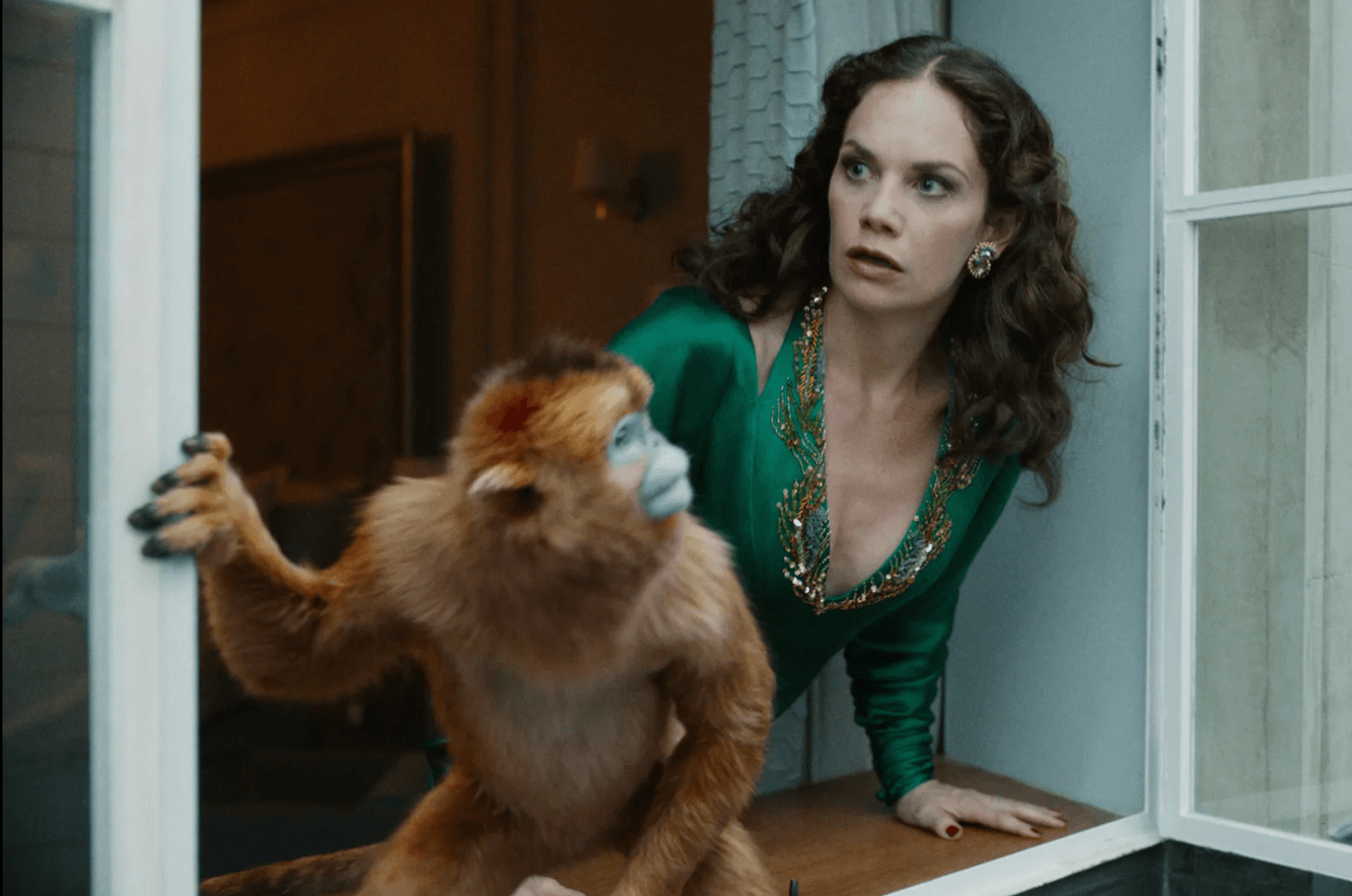
Ruth Wilson’s Mrs. Coulter and her Daemon in 'His Dark Materials'
And with the wireframe stuff, did you have that available in the edit to work with?
Yes, Framestore and Painting Practice were all at the studio along with the editing team during filming. So it helped that you could turn over shots immediately to Painting Practice and then they would do the wireframe version that could sit in the edit for when the director came in. It really helped with communication and speed that everyone was based in the same location, so you could have these conversations while the shoot was going on. And we had a guide voiceover for the Daemons, recorded by someone on set or we would temp it in the edit, so we had an idea of timing.
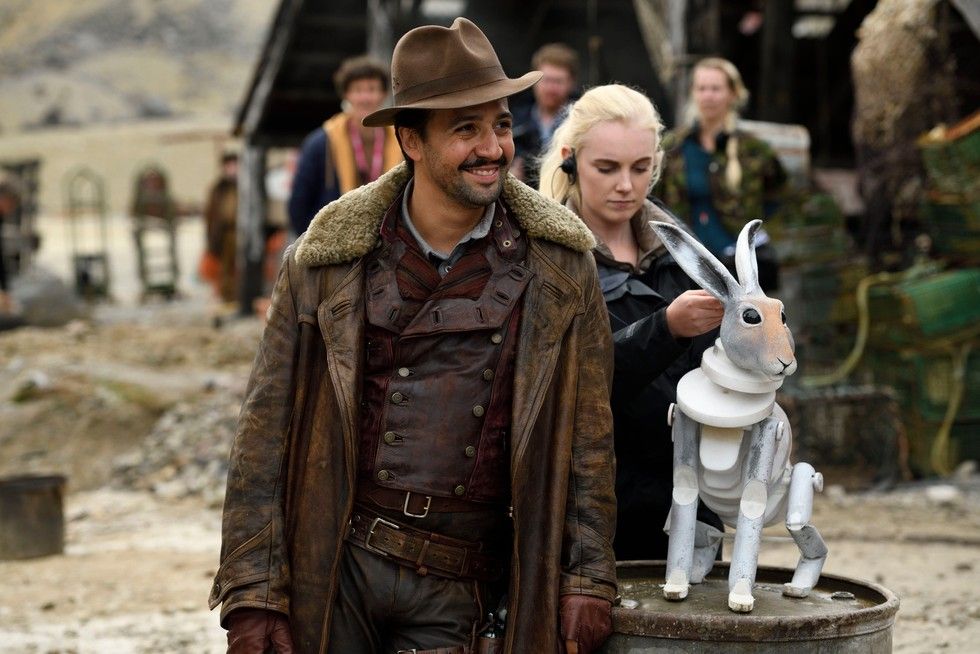
Behind the Scenes on 'His Dark Materials': Actor Lin-Manuel Miranda and the Daemon puppet
At least you had something to work with so you're not working blind in the edit, right?
Exactly, and that's something that I've taken away from His Dark Materials days and applied it to how I do things now on different jobs. It's quite easy to just record some temp voiceover and put it in your edit.
For example, say you’ve got a phone conversation to edit, where you've only got one side of the dialogue, and the other side of the conversation is going to be shot like a week or two later. I'll record the other voiceover so it's a bit clearer than someone shouting it off mic. I'll just record it and lay it in the edit, and put a caption card saying “to be shot” with the character's name. So at least you can get a sense of timing.
I feel like almost every editor I speak to these days is really big on their temp sound mix being great.
Yeah, I love sound design. It really helps build the experience when it comes to showing the cut to the director, producers and network. When I'm assembling, I'll do the basics quickly, like a phone ringing or a door being pushed, but I find temping music a bigger hurdle - it takes time to find something that feels right for where the show might end up, so it doesn’t always happen straight away. Having said that, sometimes I will add music for a montage assembly, or shots at a different frame rate, to help the scene along so like the 100 frames per second shot isn't overstaying its welcome - the music is helping to carry it through and visually it's doing what it needs to do. I'll try to get it as close as I can and then the sound team will take over and elevate it even more.
But you’re always evolving as an editor, you’re always learning more skills and you’re always picking up new things from watching other people work on shows. Currently in Avid, I've got a template timeline that I take onto every job. It’s basically video 1, 2, 3, 4, mono, and then booms and risers have their own track. And I've got stereo for atmos and music and then bottom tracks for D-verb echo, or ring out so it's not just a fade out on certain sounds. This is something that's evolved over time. But then I might try something new on the next job and adapt that into my workflow going forward.
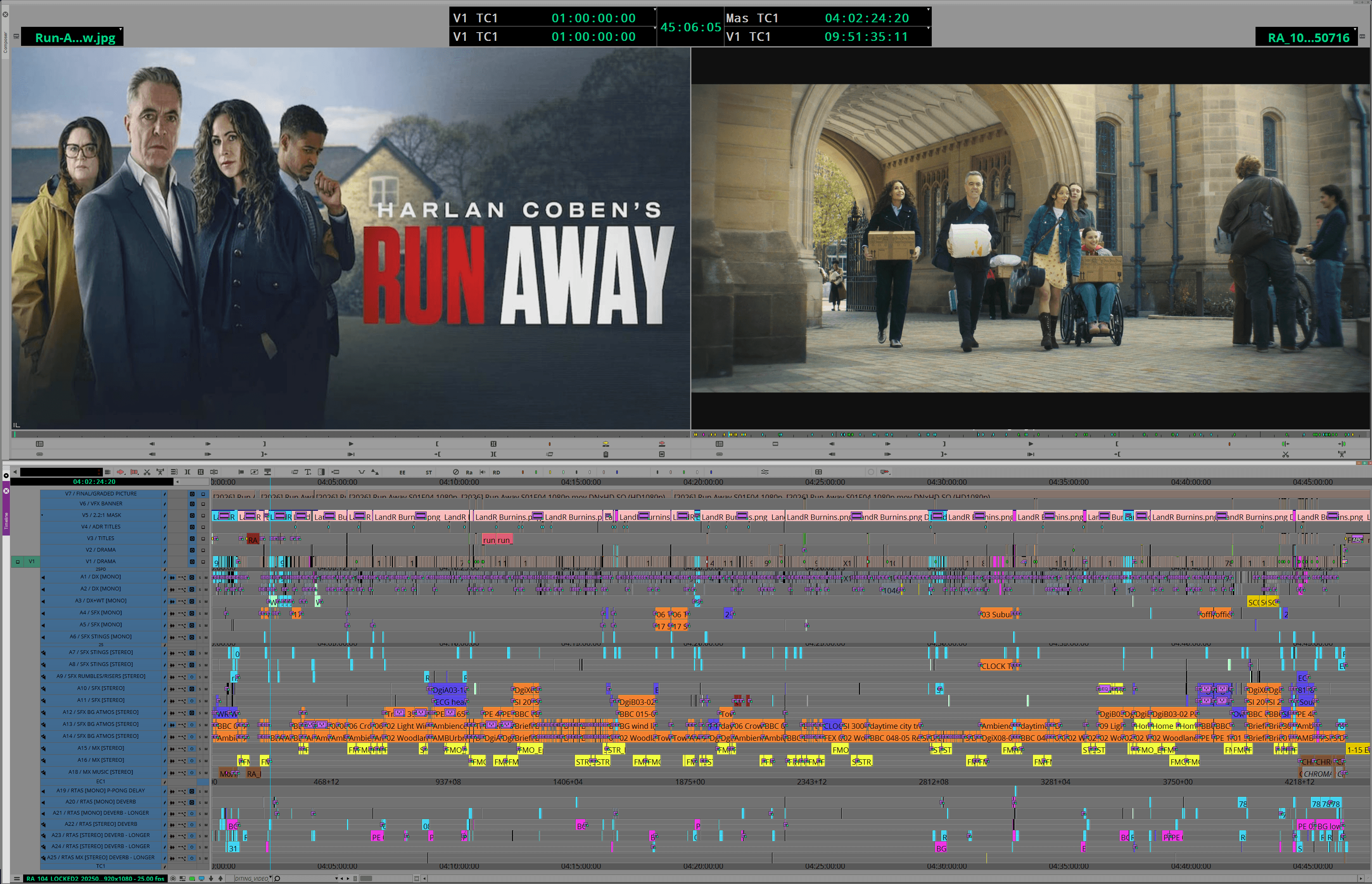
David’s Avid timeline for Netflix’s ‘Run Away’
D-verb is the Avid reverb plugin. How are you using it in your workflow?
I've got it set up across an entire audio track using RTAS. Anything that sits on that track will have a certain echo and you can go into the D-verb settings and change it. Then you just drag it onto the timeline, and it'll apply it to that entire run.
Sound effects like cinematic booms are great and using the RTAS tracks really enhance the soundscape. Before temping sound this way, I didn't know much about those plugins. I would use the SFX and add a long fade on them, but they would still sound clipped at the end. I was working a lot with director Jamie Childs (His Dark Materials, Doctor Who) who comes from a sound background and I was trying to match his knowledge. I kept thinking, what am I not getting? So I did some research and tests in RTAS, picked it up and applied it to our next edit on the film Jackdaw and Jamie was like, you’ve stepped up your sound game.
RTAS lets booms go to their natural end. I worked on a show with a big cliffhanger at the end of an episode where one of the characters is going to be shot. It’s a big confrontation scene. We wanted the gunshot to not just end abruptly but really ring out and finish in a satisfying way. But it went so long that it felt like the gunshot was still ringing into the end credits. I was like, we've gone too far!
When you say booms, you mean boom sound effects, like an impact hit?
Yeah, an impact boom. If the scene's uneasy, I will put a little rumble in there. So it's not a score, it's just kind of sitting there in the background. You can tell something's a bit off but you can’t pinpoint what it is. Not to give away all my secrets, but that's something I've developed over the last few years. I'll hit a boom or I like to put rumbles on certain scenes. It just makes it a bit uneasy.
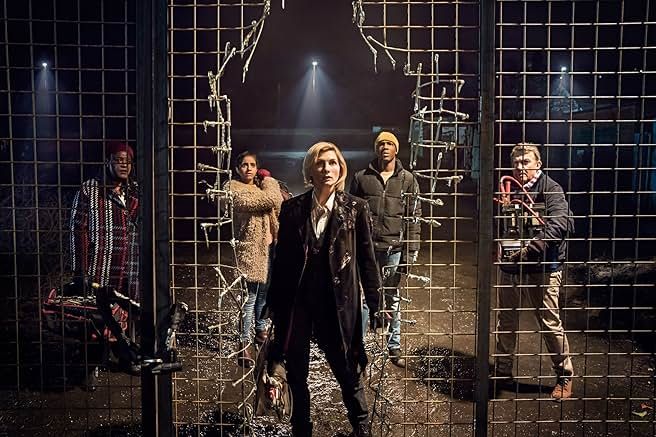
‘Doctor Who’, episode 1 S11 “The Woman who Fell from Earth”
To go back to the beginning, how did you get your start in the industry?
I graduated in 2005 and my friend from the Media Production course knew about a drama shooting in the North East of England. So I applied, met the line producer, and got a job as an assistant editor. But I had zero experience and it showed, I was fired after a week. The showrunner, who also owned the company, could see that I was new to the industry but super eager, so she brought me back as a trainee.
So, I stayed on the same series and was trained by the assistant editor, looking after four editors in total. By the end of the 4th blocks shoot, the assistant editor was due to finish and I had enough experience at this point that I finished the series as an assistant editor. So, I started off as an assistant, got fired, became a trainee, and then became the assistant editor again by the end of the shoot. And that same production company brought me back as the assistant editor on the next series.
It was great assisting four different editors on a show like that and also beneficial as that's four different contacts to assist later down the line. I just stayed in touch with all of them, passed out my CV and that brought me from the North East to London when I got an assistant editor job on an HBO series called The No. 1 Ladies’ Detective Agency.
I knew from the get-go that I wanted to be an editor, but obviously I needed to learn the craft, learn how cutting rooms operated, how the dynamics of different directors, and editors work? So the whole time of being an assistant, I was learning and observing and gaining the skills that I needed to take away with me to become an editor.
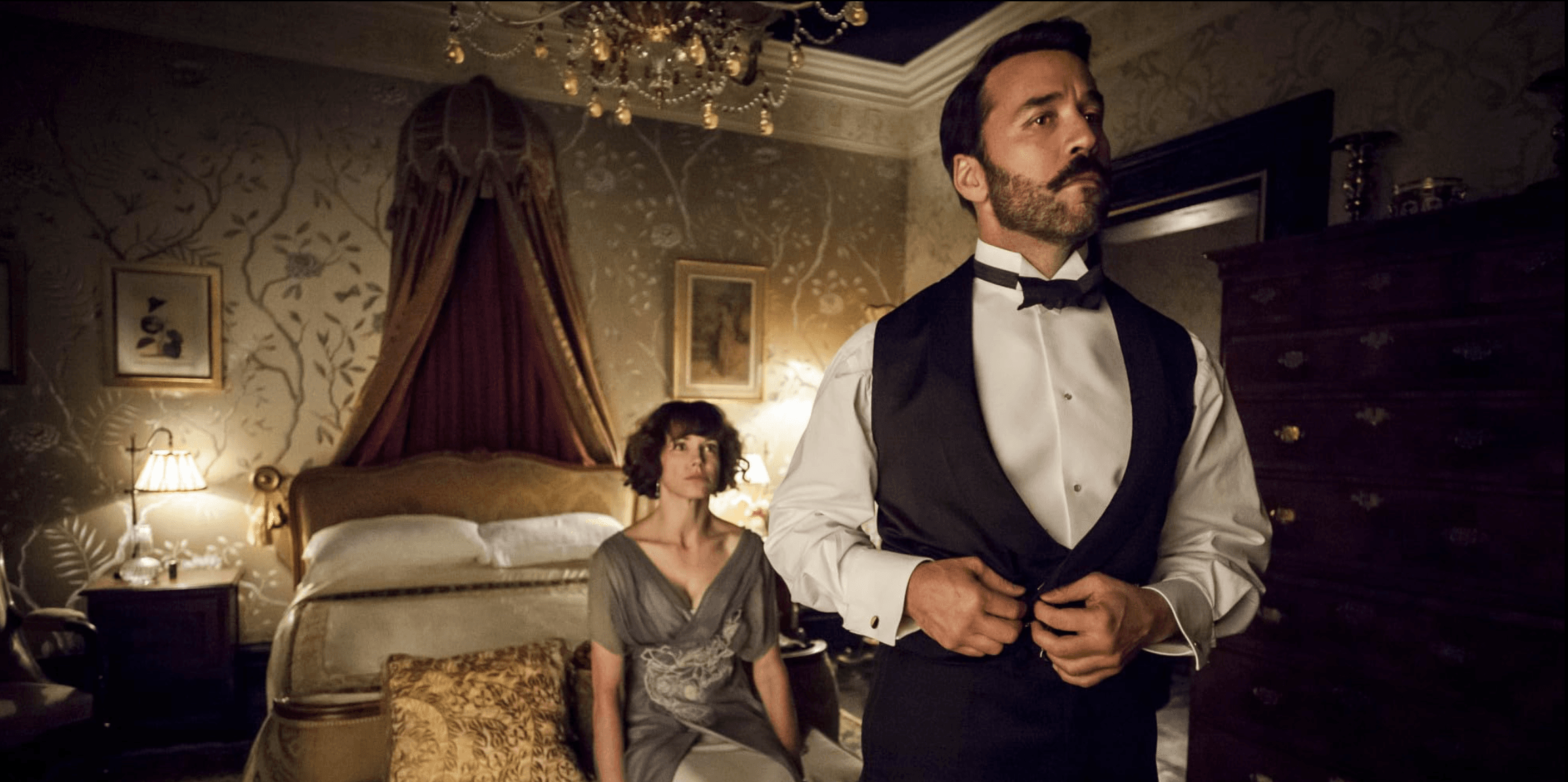
Jeremy Piven and Frances O’Connor in 'Mr. Selfridge'
I’m not in London anymore. I’m back in the North East and not many people are based here so I’ve made it incredibly hard for myself by going quite far away from the action, but that’s the beauty of doing it online and working remotely. We used Louper on the last job doing a few different elements like music spots with our composer. The shoot was here in the North East, the composer was in London, and our director needed to go away for certain periods. So, we'd all just jump on Louper to watch the episode and listen to the cues that the composer was working on, to review in real time. Louper just unifies everybody. We're all looking at the same screen, listening to the same music. It made the workflow very quick, seamless and everyone's dialed in.
Yeah, the alternative would be sending out links, which is like trying to have a conversation by text message.
Exactly. I'll do my thing and present real time instead of just sending off a QuickTime and getting notes back. A lot of the directors I've worked with want to either be in the room physically or remotely on Louper. It solidifies communication because we're all listening to and watching the same thing and it can't get misinterpreted by a written note. Sometimes you might think someone’s tone is angry and then you jump onto Louper and everyone's absolutely fine.
Totally, doing things in real time where you can see what works and what doesn't work, might spark another idea. And that’s often difficult with written notes. To be able to present a cut and go, this is what I've done and have immediate feedback is great.
Yeah. It just speeds up the process, and it gets a point across straight away, doesn't it? If you can work fast, you can try something while everyone's in the room. And then you can get sign off on that specific note in real time and then move on.
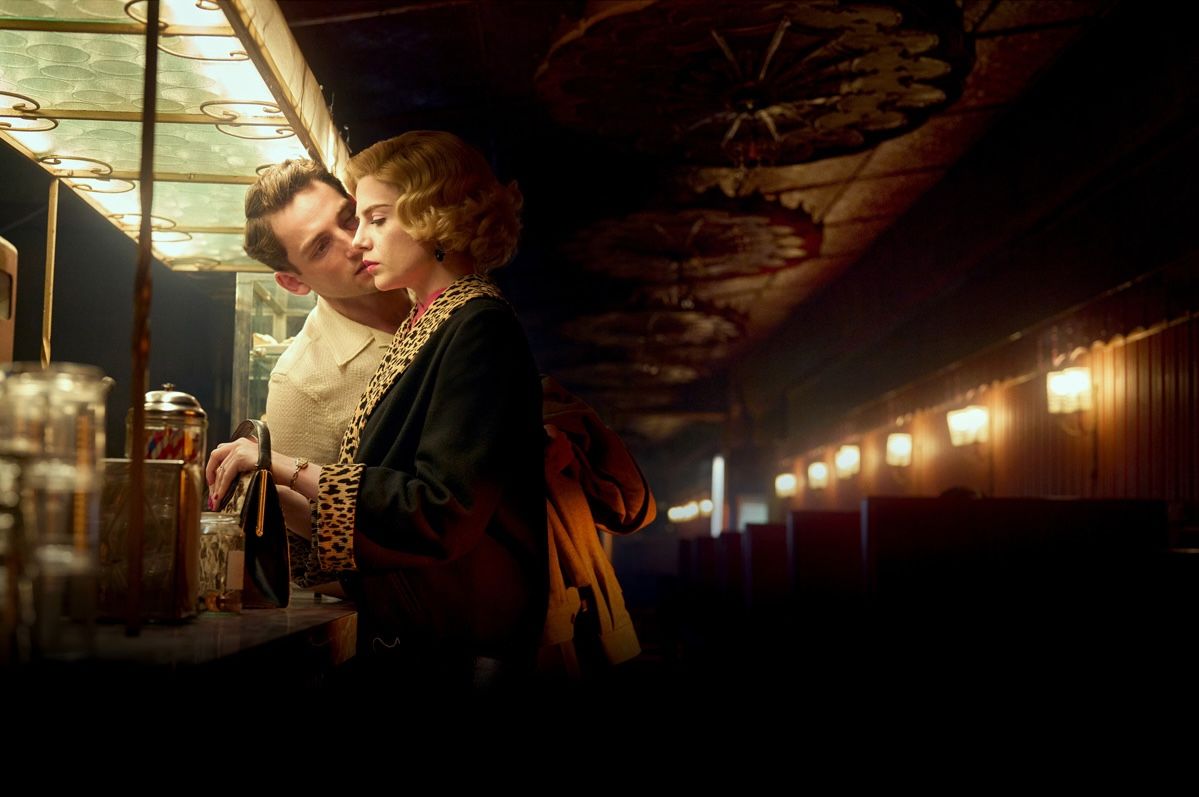
A scene from 'A Cruel Love: The Ruth Ellis Story'
Can you walk us through what it’s like editing the first two episodes of a new show. I imagine it’s harder than when you come in to do a later episode or a second season?
Yeah, I just worked on a thriller called Forever Home, based on a novel by Graham Norton. And you're just discovering things like the tone of the show. It’s a thriller but there’s a lot of comedy in it. It’s a black comedy heavily influenced by Fargo (the TV series and the film). So, as an editor you think, okay let me put the Fargo soundtrack down as a temp score and then you realize, actually it’s not quite right. If you put a temp score down that’s too dark, too much for a thriller, but the characters on screen have these comedic moments, you then have to find something lighter in tone. So, these were things that evolved during the final cut. I didn't quite get it right all the way through but block two benefited because the editors were inspired or influenced by what we chose for those lighter moments so they could then delve deeper somewhere else but still have the right tone.
To move onto the show, Lazarus. How did you approach flashbacks in the edit?
A lot of the flashbacks in Lazarus were scripted because the story was centered around an event that happened over 20 years before the show’s ‘current day’. So it would flash back to when it all happened at these kids’ graduation party.
Every time you met a new character from present day, you would flash back to that event, and you'd see a different point of view. So it was all filmed bespoke for the bigger puzzle. But overusing flashbacks can become gimmicky. It all needs to serve the story so it was mostly scripted for good storytelling purposes and exposition but sometimes we’d find ourselves in the edit wondering if we should add a flashback here and there. And we’d be like, let's just go for it. We would organically find new places to put flashbacks that weren't necessarily in the script, but we’d make sure it always served the story. Some of them were just kind of happy accidents.
And I guess if you already had it established as a storytelling device, you can use it quite freely.
Exactly. It doesn't feel like you’ve shoehorned in it because it's the DNA of the show, isn't it?
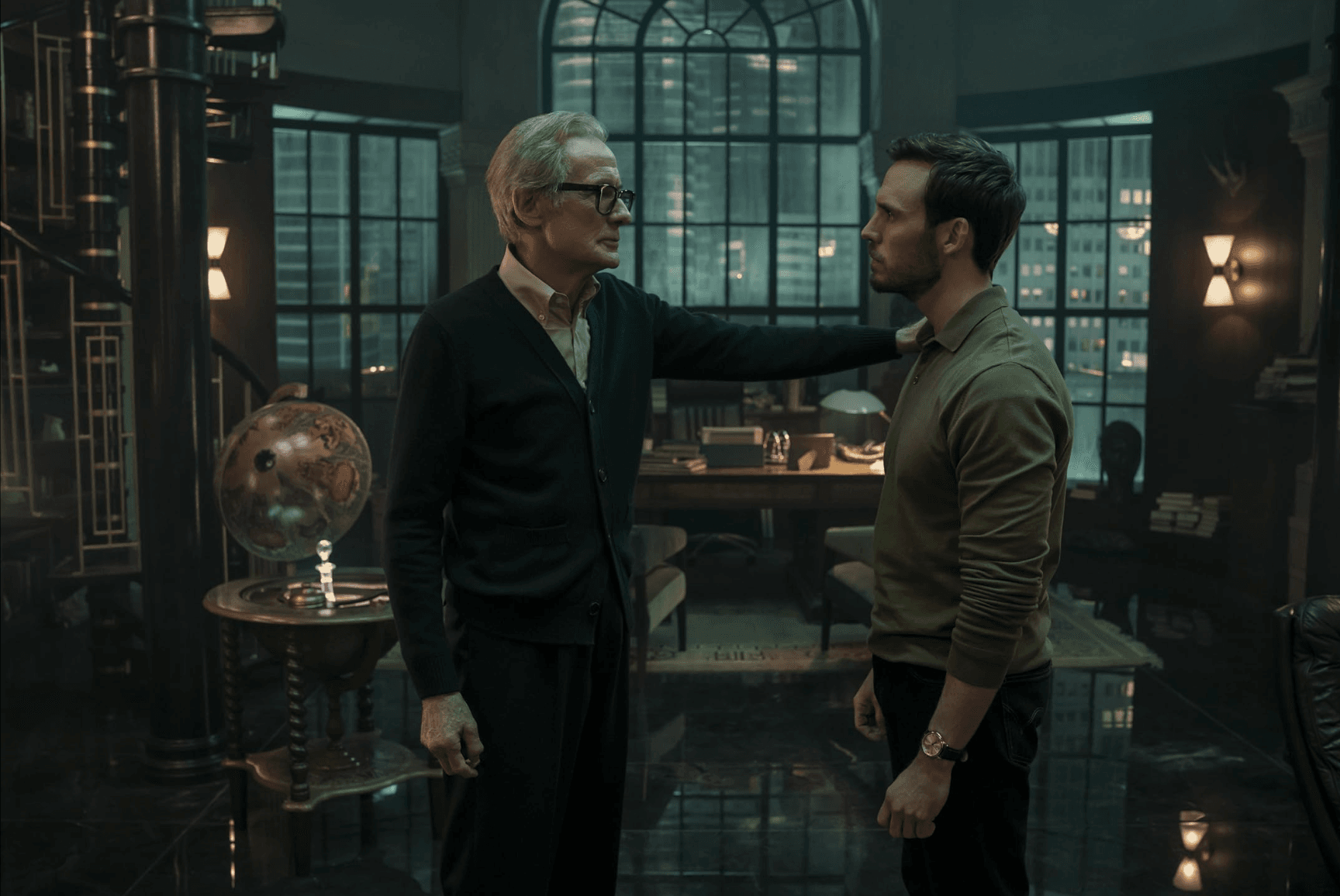
Bill Nighy and Sam Claflin in 'Lazarus'
I'm curious about your approach to script, especially when it comes to dialogue scenes. Many editors feel that by the time you get the rushes, the script no longer matters. All that matters is what was shot.
I always read all the paperwork from the previous day’s shoot. You'll get the marked-up script, and you'll get continuity notes for the scene with information on the setups like, slate one is a wide shot with four takes and slate two was a mid-shot etc. This is all important because if I don't stick to the script, I take the risk of someone going, you missed a sentence or word that was vital to the scene. So, I will read all the notes, and then we'll look at the footage.
Sometimes there's a lot of rushes and I want to get in there and make a start, so what I do is in the scene bin you'd typically have all the slates, but I'll create a sequence and put all those slates on the sequence. Then I'll pop that into the source side and I can scroll through everything to digest it very quickly. After that I'll go through and put markers on stuff I might want to use or I don’t like. It sounds like I'm doing more work than I should do, but I'm kind of interrogating all the footage to a certain extent.
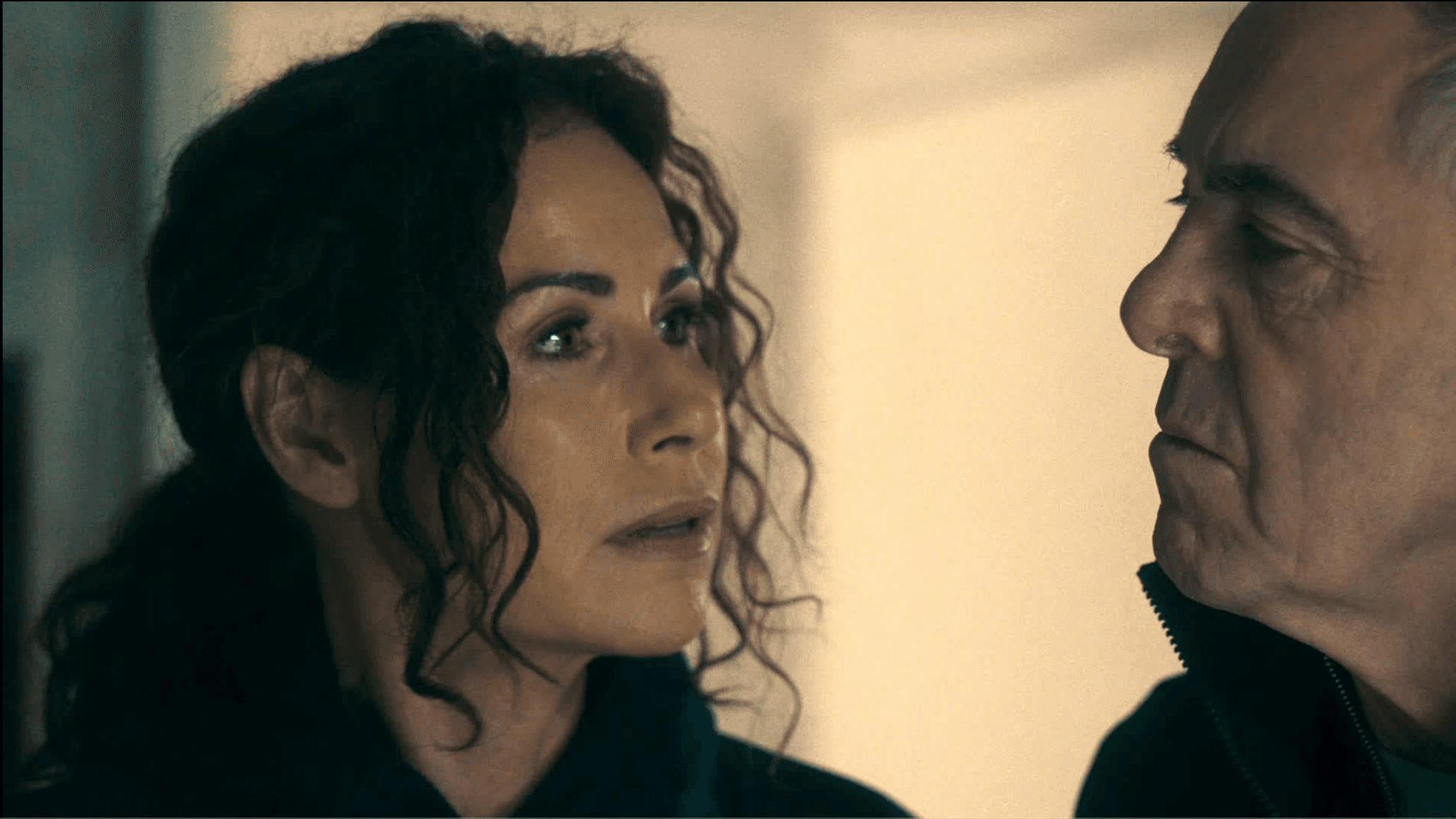
Minnie Driver and James Nesbitt in a scene from 'Run Away'
For a dialogue scene, I’ll get the master shot, which could be a WS favoring one character talking to another who has their back to camera. Whenever the person with their back to camera talks, I'll make a false edit on the timeline. Then I'll find the shot favoring that second character talking and put them on the timeline, replacing the sections where their back was to camera. And then I’ll look at the script again and go, okay, where would I want to go tight? What's important on the close-up? Then I'll replace a lot of the mid shots and put the close-ups in. After that, I will go in with the wide shot at the start or when someone moves. I’ll keep referring back to the script and consider if the bit I’ve chosen is right for the scene, and is the performance good? If not, I’ll go to a previous take and continue to flesh it out and keep transforming the scene.
But I've been very fortunate to have great material and performances to work with. Everyone knows what they're doing.
Some of my favorite stories are about editors training up assistants through remote workflows. We were both assistant editors once so I’m interested in your experience now as an editor training assistants or trainees coming up these days?
We have to be mindful of that. I just met with a woman online who was graduating from college. I will try and impart as much information as I can and offer contacts to help where possible. My assistant on Run Away was living in Manchester and I’m in the North East. So you’re right, we can use the remote workflow as a great tool because it gives people from different parts of the world the opportunity to learn and evolve without having to be in the same room together.
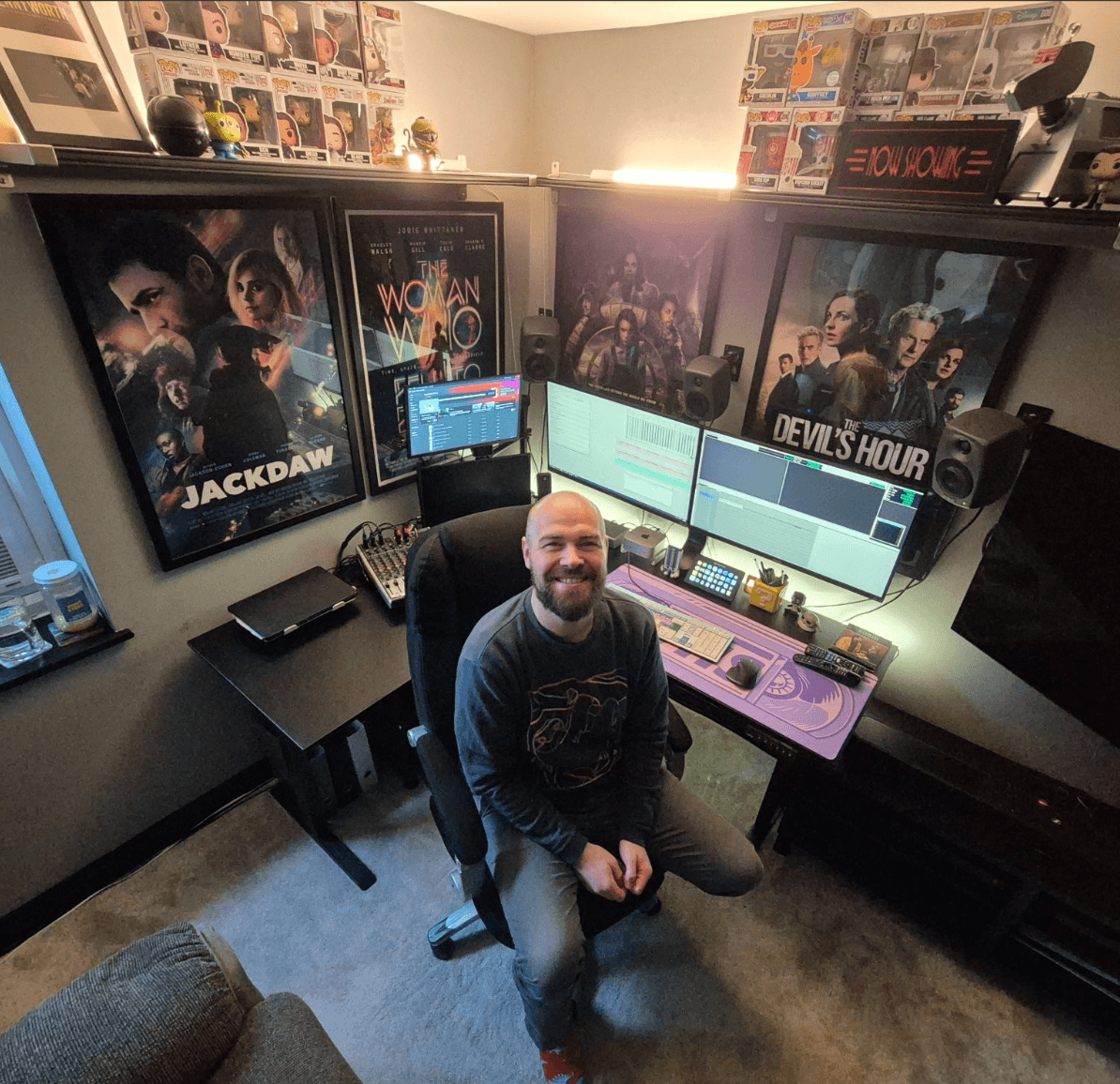
Editor David Fisher ACE, BFE in his home cutting studio
His Dark Materials. Creator: Alex Bailey. Image Credit: BBC/Bad Wolf/HBO
Doctor Who. Photo by Ben Blackall. Credit: BBC Studios 2018
Mr. Selfridge. Credit: ITV
A Cruel Love Story. Credit: ITV Studios
Lazarus. Photo by Ben Blackall/Prime. Credit: Amazon Content Services LLC
Run Away. Photo by Ben Blackall. Credit: Netflix
Images of David Fisher courtesy of David Fisher. Photo by Rachel Erskine.

Use Louper to stream and collaborate on live shoots, edit sessions, vfx reviews and more - securely and in seriously high quality.

