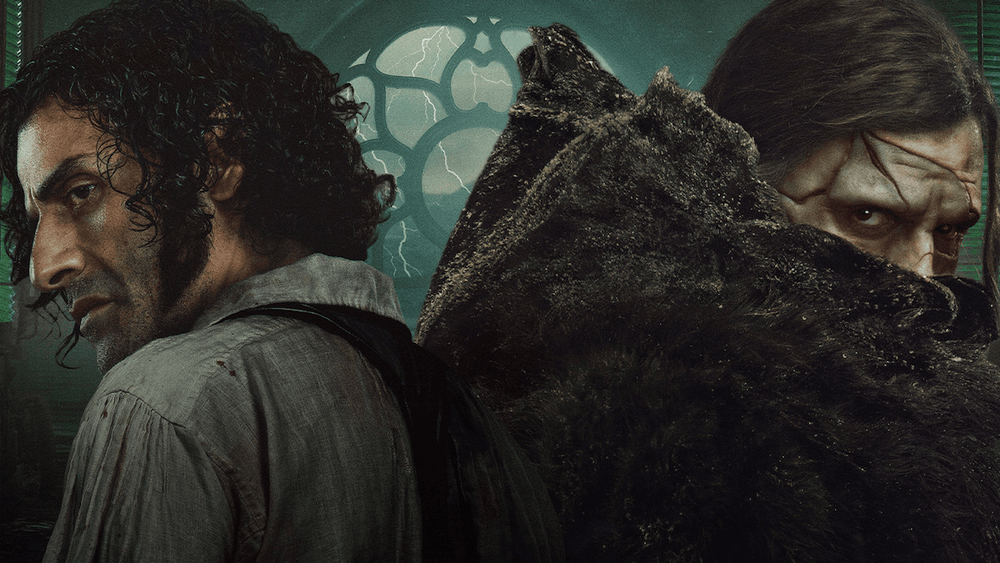
Cutting Guillermo del Toro's Frankenstein with Editor Evan Schiff
Cutting Guillermo del Toro's Frankenstein with Editor Evan Schiff
Drawing on a relationship that began years earlier, Evan reflects on collaborating with Guillermo del Toro on Frankenstein - a partnership shaped by instinct, trust, and tools like Louper that kept them connected across distances, including remote sessions with Alfonso Cuarón.
You worked with Guillermo del Toro pretty early on in your career as an assistant editor on Pan’s Labyrinth and then Hellboy II**. I’m curious to know what it was like, and whether that had any bearing on you actually cutting Frankenstein?**
It was luxurious! It’s not often that early in your career you get to work for a guy like Guillermo. For Pan's Labyrinth, they were looking for an assistant editor based in LA who could speak Spanish. They had shot it in Spain and had rented a house in Woodland Hills for the editor. There was only one Avid so I would stay in the room when Guillermo and Bernat Vilaplana would edit together. I became comfortable giving my opinion and talking with them as equals, which is something that Guillermo and Bernat very much encouraged. It was an amazing educational experience.
Guillermo values editing and he values your opinion. On Hellboy 2, if Alfonso Cuarón, or Alejandro Iñárritu, or any of his other friends came in to watch something, I would be more than welcome in the room, and go with them to lunch afterwards where they’d talk about the film. I was really included in a way that later as an assistant editor working for other directors, I certainly wasn't. And when I got onto those jobs, I realized it's not always like it is with Guillermo.
When it came time for Frankenstein, my agents told me that Guillermo's producer was looking for an editor. I went directly to Guillermo on Twitter and DMed him. I said, “I had such a great time on Pan's Labyrinth and on Hellboy 2. I would love to do this again with you.”
And he got back to me pretty much instantly and then very shortly I had a script, and a little bit after that, an interview. I went in for the meeting and his assistant was like, “Guillermo, you have an editor you need to interview”. And he looked at me and said, “Oh, hey Evan. Yeah, you’re hired.” And that was how I got the job. I assume he also looked at the things that I've edited since 2008, which is when Hellboy 2 ended, in order to know what I've been up to in the meantime. But yeah, Frankenstein came about entirely because of an existing relationship on Pan’s and Hellboy.
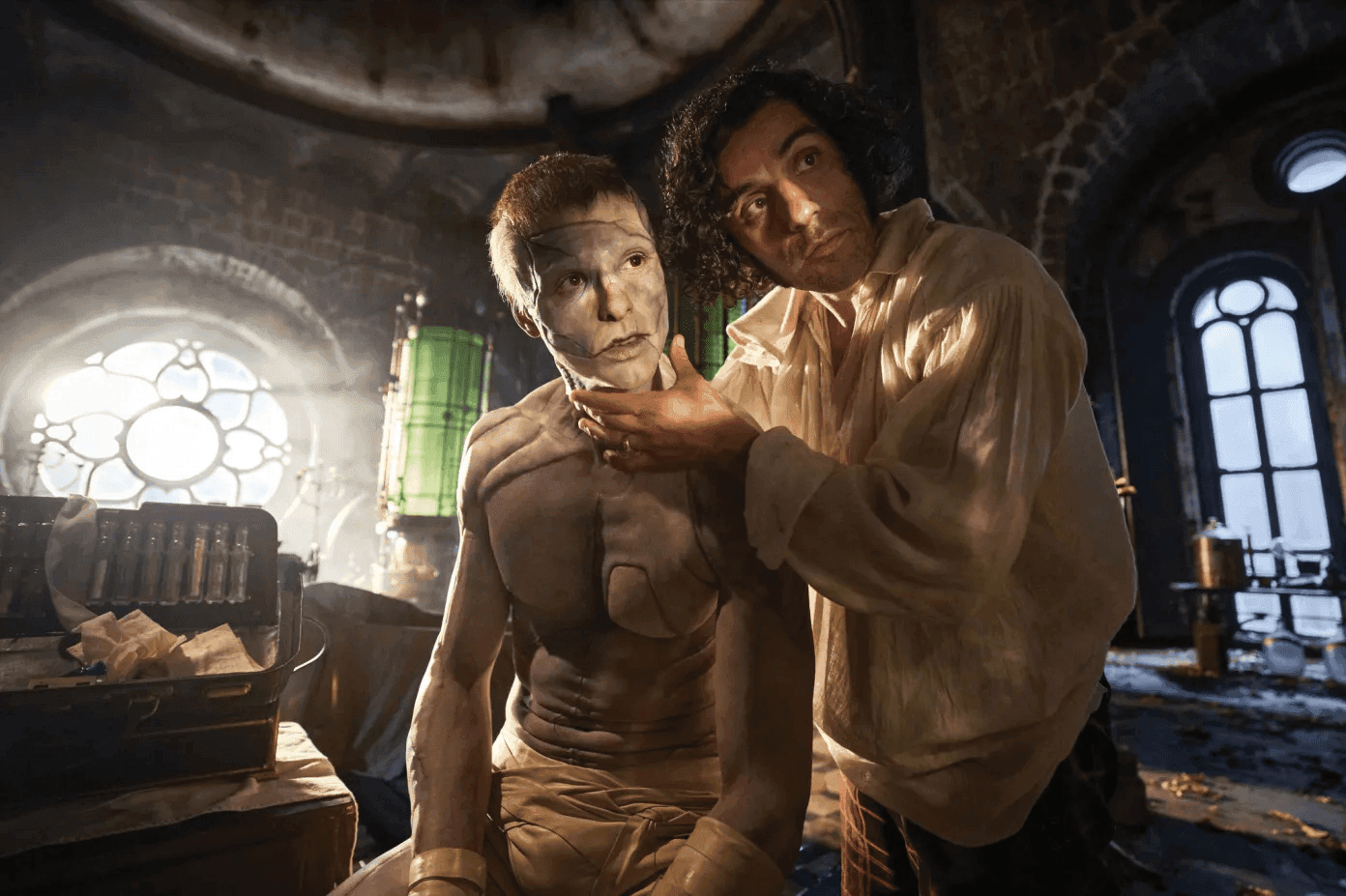
Victor Frankenstein (Oscar Isaac) with the Creature he has brought to life (Jacob Elordi)
On Frankenstein in particular, how were you keeping up to speed with the shoot?
Guillermo likes to cut every day, and on this film we got into a routine of editing for two hours before call. So whatever they shot on Monday, I would come in four hours before call on Tuesday morning, and I would spend two hours with my assistant, loading dailies, organizing, cutting and doing a quick assembly. Then Guillermo would come in at 6am and we would edit. So by the time he went off to set, we had a cut of the previous day's material that he was happy with. We’d integrate that into the growing reels and output a QuickTime for him to copy to his laptop.
By doing that, he was able to adjust the day ahead if he needed to, or get a shot that he didn't get the day before. It would also allow him to start thinking about what he was shooting the day after that, and since he's the screenwriter he could go home on the weekends and adjust the script going forward.
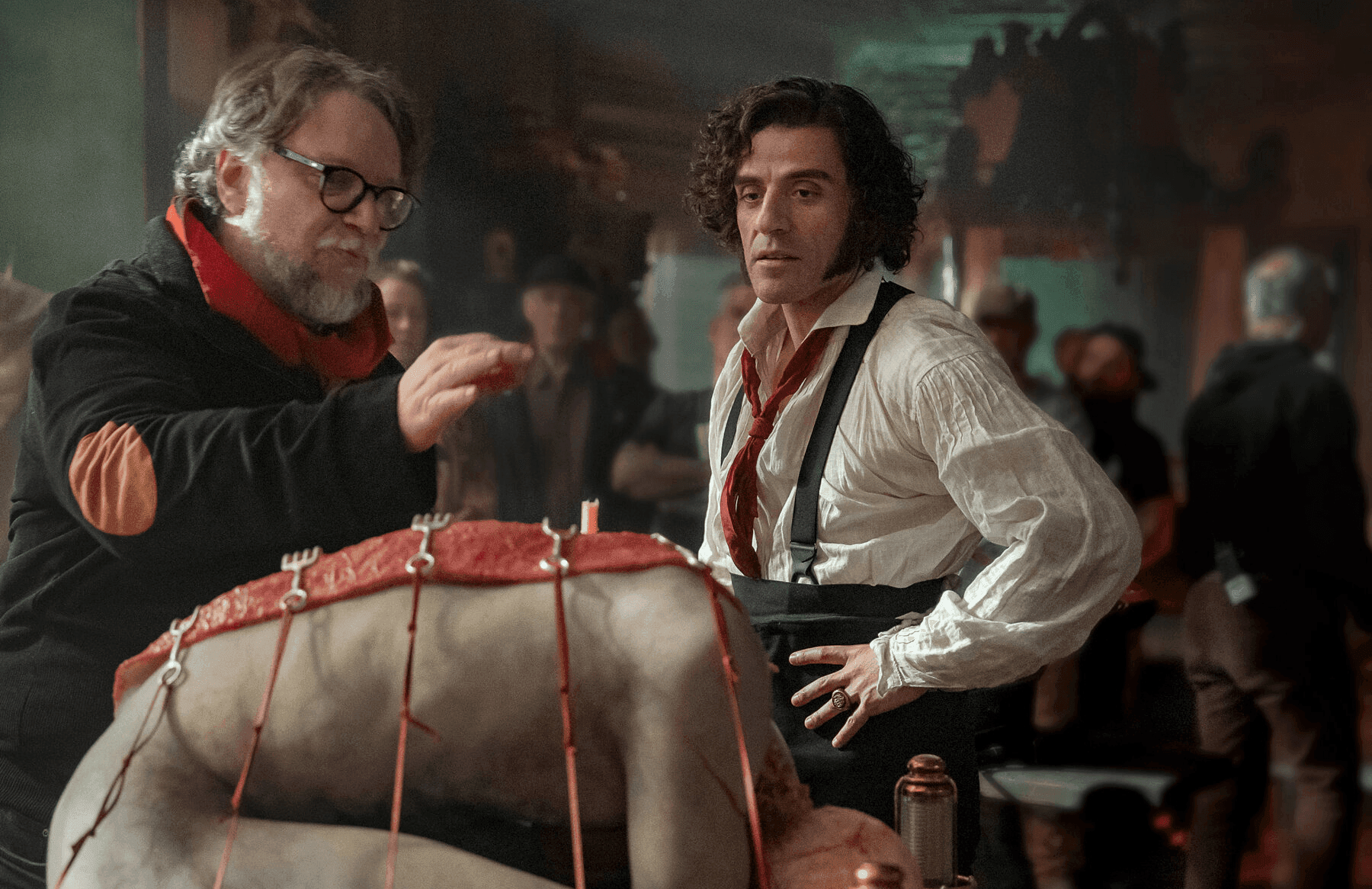
Director Guillermo del Toro with actor Oscar Isaac on the set of ‘Frankenstein’
Guillermo shoots with a lot of intention, and he shoots single camera, single unit. So it was not an unmanageable amount of material. But when he walks in at six in the morning, he expects you to know everything and have memorized all the different takes. Guillermo also knows his footage very, very well, so he would come in and be like, “I see you used take three, but let's try take five, there was a look in there from Christoph Waltz that I wanted.” He'll know the take just by the performance that he's seeing on screen, or the camera move.
Being on location in Scotland was definitely the hardest part. We had a trailer and we were carrying around NAS boxes that we would jack ethernet cables into and treat as our Nexis. There was a dailies person from Company 3 whom we actually never met, because she was on opposite schedules to us: she was working while we were sleeping. So at 3:30am, we're collecting a hard drive of dailies from her hotel reception desk before going out to our trailer and loading them in. It was tricky to get that timing right, there were definitely a couple of days where we were very close to missing our deadline.
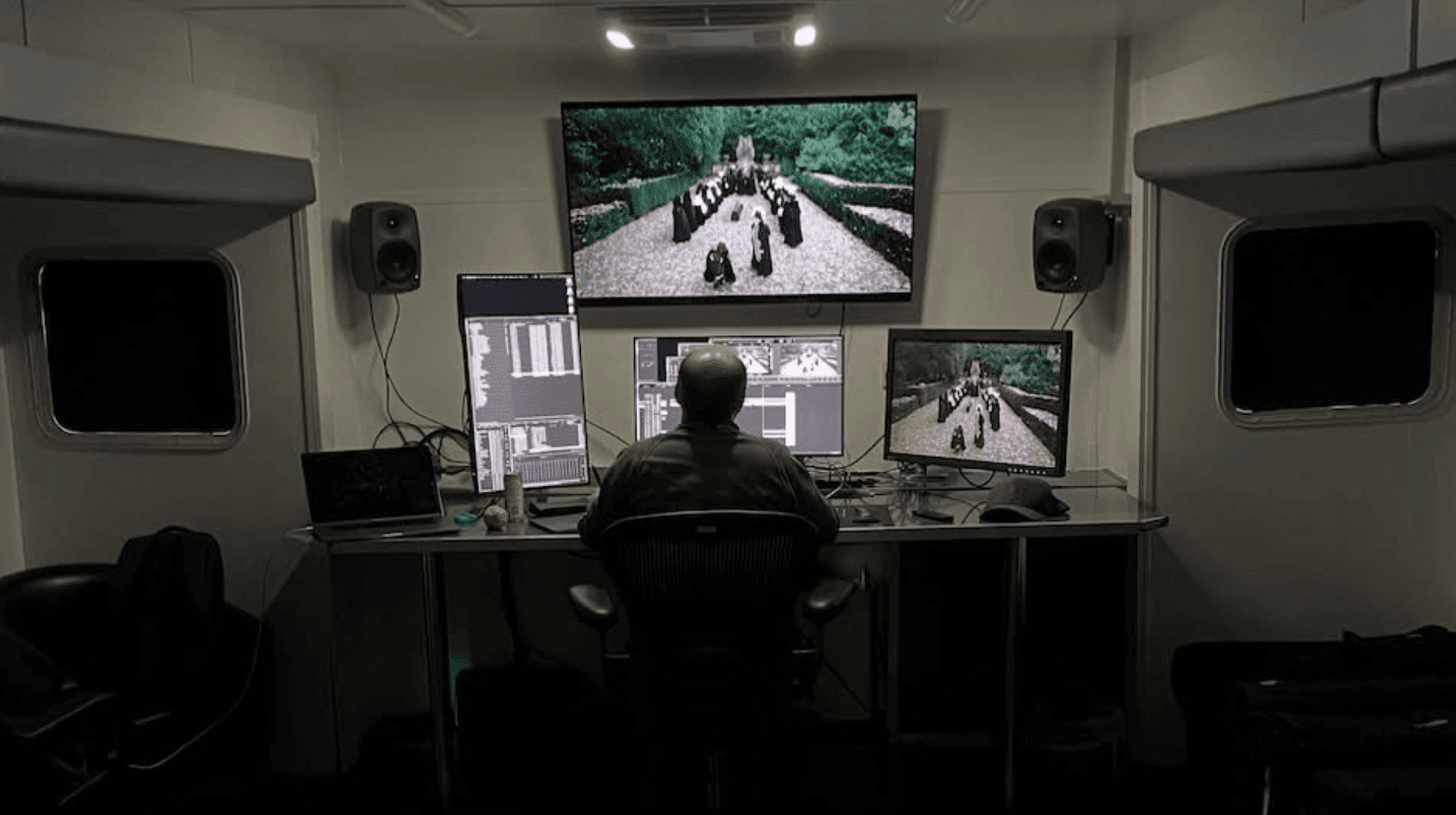
Evan editing from a trailer on location in Scotland
In terms of performances, how much does Guillermo shoot?
He shoots four to eight takes on average and gives the actors a ton of leeway to try things and to do what is coming naturally to them. We didn’t have split screens where we're using take three from an actor on one side and take five from the actor on the other side. I don't think that Guillermo likes to work that way. He'd rather just get the take that he likes.
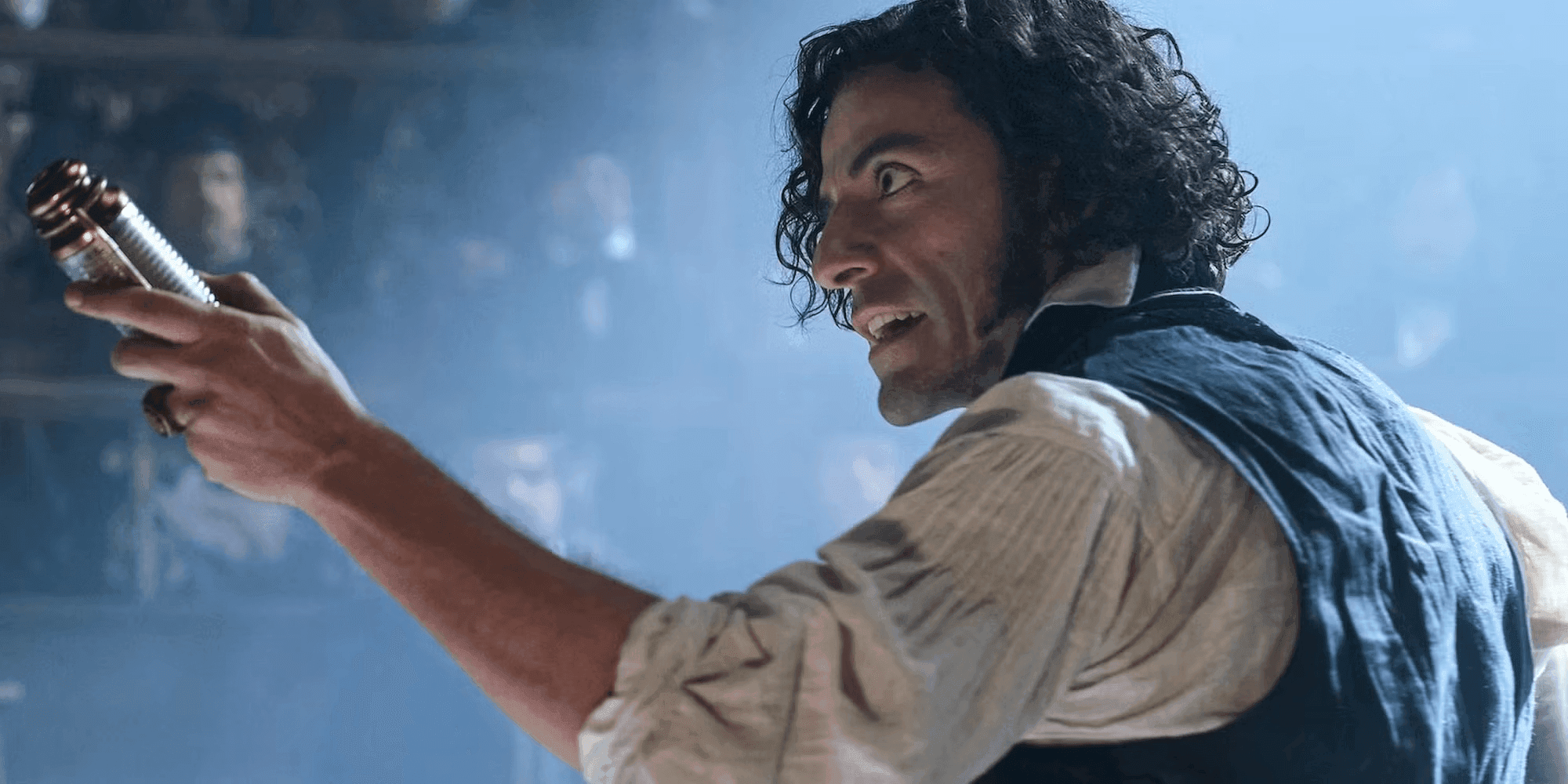
Victor (Oscar Isaac) passionately argues his case
Talk to me about speed in editing, because I have to imagine that you cut incredibly fast.
Actually, the only question Guillermo asked me in my interview was, “you cut fast, right?” And I was like, “yes.” By the time he's finishing giving a note, he wants to see it immediately. He likes throwing things out at you and by the time he finishes talking, I have maybe five or ten seconds before he's like, “okay, play.” So you do have to be fast.
One of the great things about having a director that recognizes the power of editing, is that he does want to be there all the time when the editing is happening. He's got his mental checklist of the things he's been thinking about as he's been watching the movie at home. He comes in and he's like, “I want to try this, this, this and this.” In post-production, because we had done so much of the editing during the shoot, he might only come in three days a week, because obviously he's got many other things on his plate. But when you have his attention, then you have his entire attention.
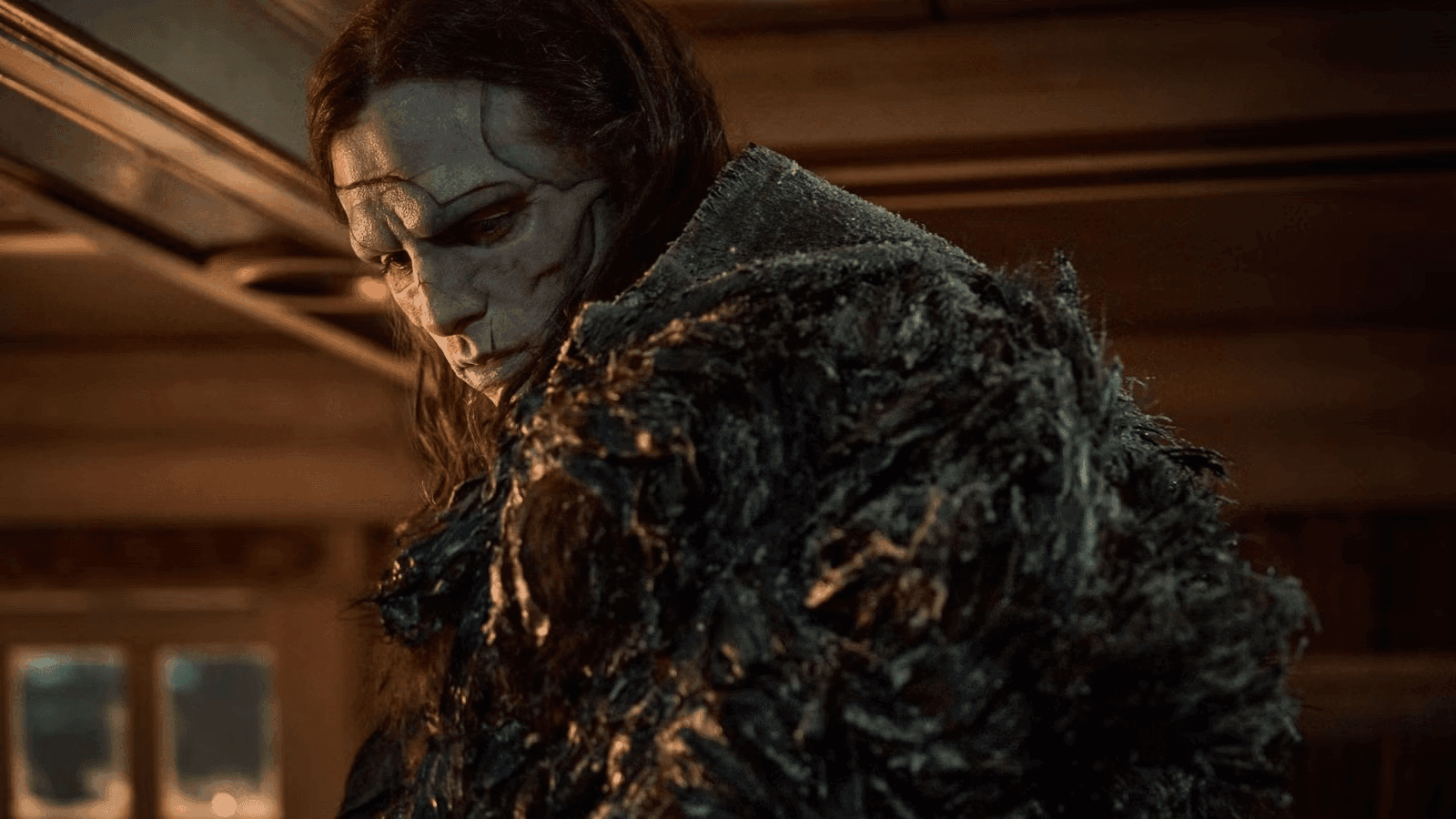
The Creature (Jacob Elordi) begins his tale
With the Creature’s part of the film, were you consciously treating it in a different way or cutting it in a different way?
It's definitely shot in a more languid way: the creature is a new being and needs time to experience the world and to learn about the world. While Victor's section is very manic and frenetic and energetic, the Creature’s section can't be that way because the creature needs time to appreciate the world around him. And so it was definitely shot that way, acted that way, and then it was edited that way.
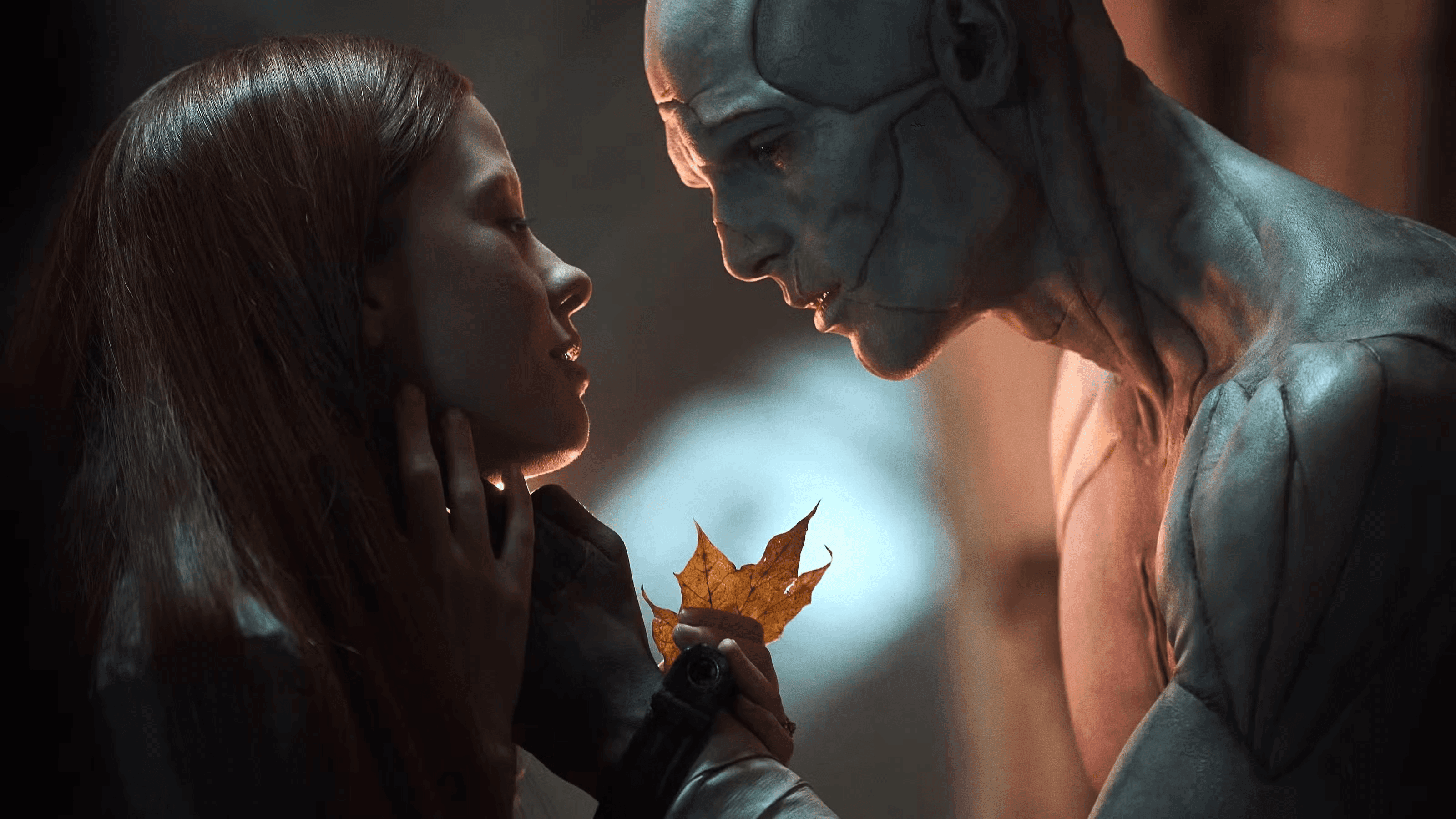
The Creature (Jacob Elordi) discovers kindness when he meets Elizabeth (Mia Goth)
You used a waltz in the body assembly montage, the music changes the mood from what you're seeing on screen, but there's also this real care taken by Victor in the assembly of the body, like he takes great pride in his work.
This is definitely Victor in his element. You could even dare to say he's having fun, he is making something artistic. As Mike Hill says, the creature is not supposed to look like a car wreck victim. He's being very careful and thoughtful with how he's putting the Creature together. It's gory, but it’s not supposed to be a horror moment.
Guillermo shoots very precisely: they shot the montage in the course of a day and there’s actually not too much more footage than what is in the final film. In this instance, it's a montage that needs music as you're cutting it together. I found a waltz from Crimson Peak that Alexandre Desplat composed and it worked so well that it lived all the way through post-production. There was another waltz that we tried, which was Shostakovich’s Jazz Suite No. 2. And that also works in a slightly different way. Guillermo would switch back and forth between them. Both of them were good, depending on the mood of the day. And then ultimately Alexandre composed his waltz for our movie, which was perfect.
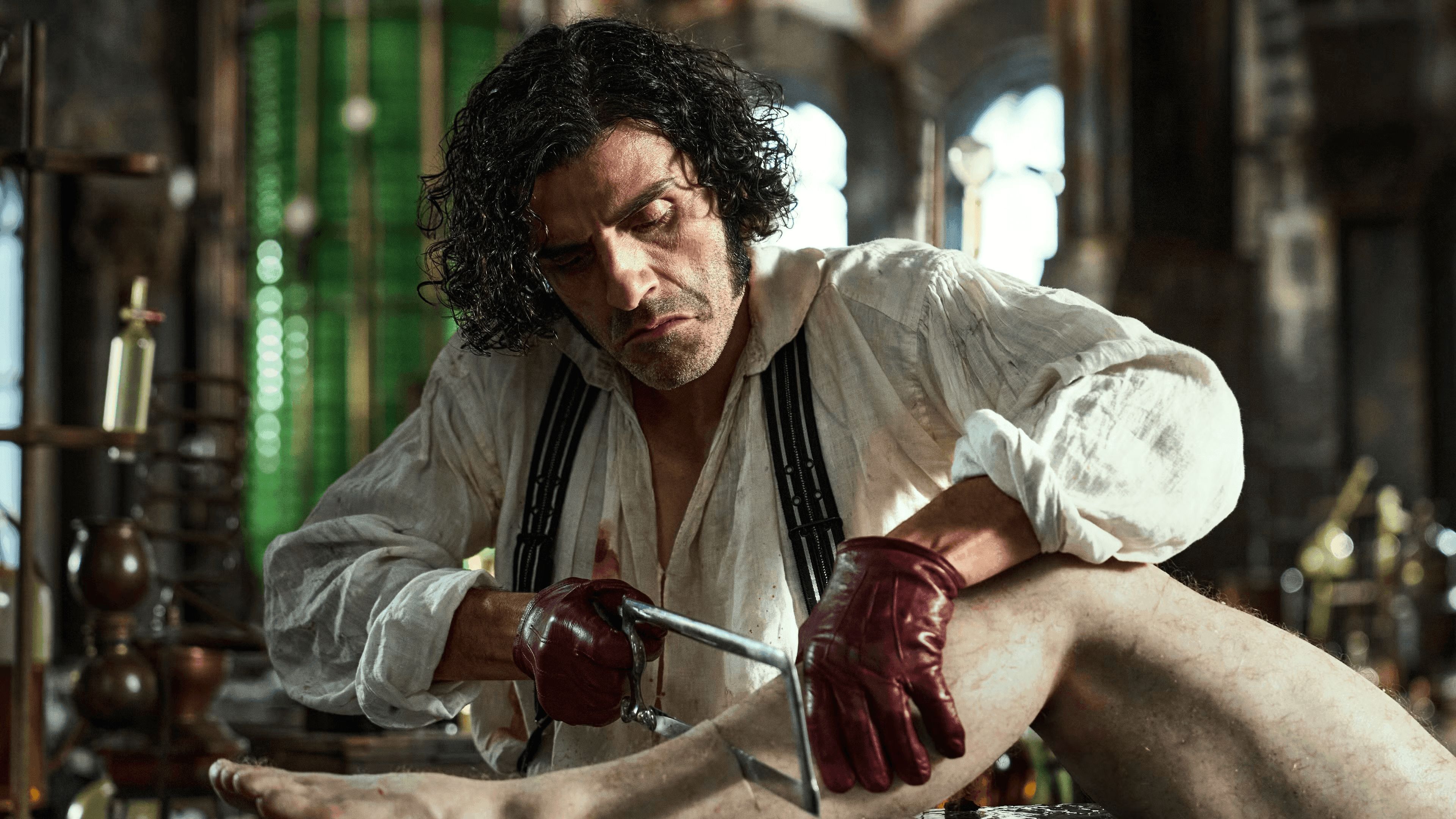
Victor (Oscar Isaac) builds his Creature with intention and care
I know you take sound really seriously in editorial, because it's such an important part of the process. Has that always been the case for you since the beginning?
I played piano when I was a kid. I love the music editing part of it, finding good music to sync up with a montage I've just put together. We only had a music editor over the first two or three months of the shoot, after that Guillermo and I would do it together. Sound for me has always been something I've liked doing, that I find important.
My long-time assistant editor, Brit DeLillo, was with me on Frankenstein and also on The Marvels. On The Marvels, we never did a temp mix. We had access to a theater, and everybody had 5.1 in their rooms. We mined every Marvel movie that we had access to and created our own library of Marvel sound effects, and we had a really complex, complete sound mix that we used for about eight preview screenings on that movie.
It's really important, whether you have a preview screening for a 300-person audience or just two of your friends. Even if you give all the disclaimers like “it's temp sound, it's temp color, it's temp VFX, it's temp music,” in the end, it doesn't really matter because it still bumps people. They rate the movie lower because somebody in the audience inevitably goes, “well, it's not done yet.” It's a block that they just can't get over. So the more that you can make the movie feel like it is complete, even if it's very far from being complete, the more valuable feedback you get.
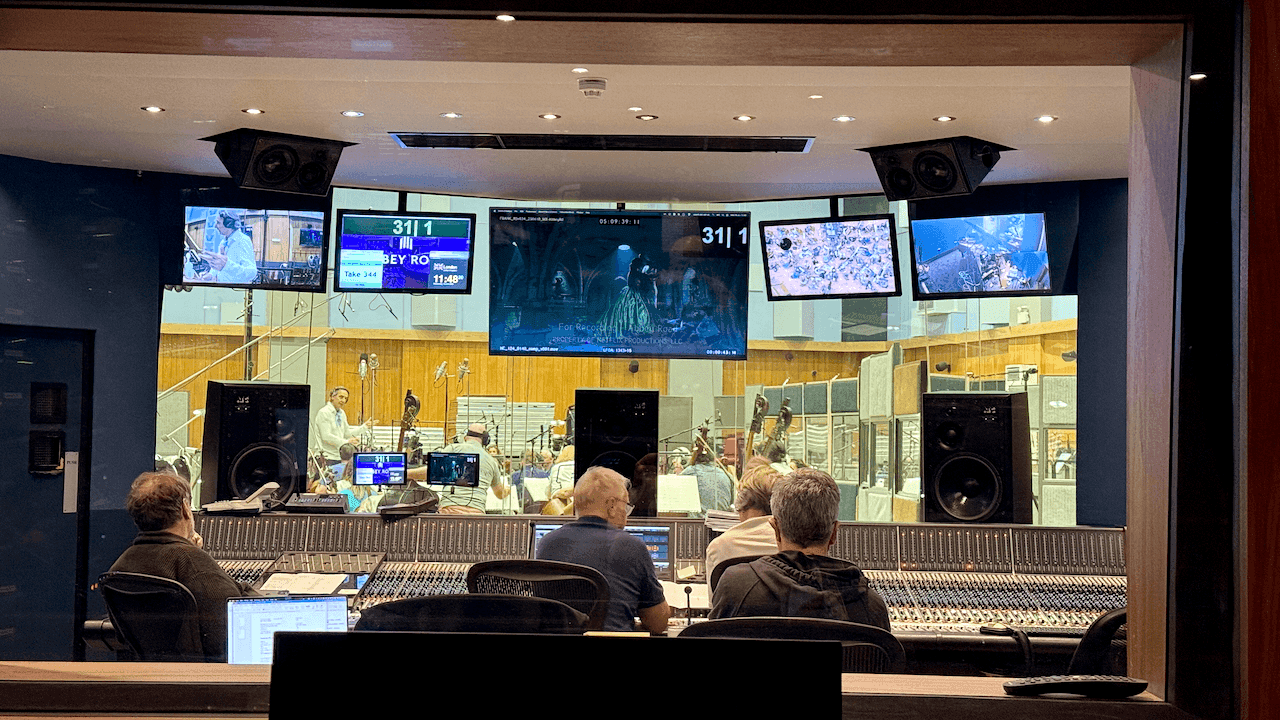
Recording Alexandre Desplat's score at Abbey Road Studios
How was Louper used on Frankenstein?
The first experience I had with Louper on this show was on a sound spotting session with Formosa in Toronto. It was early on in post-production and it worked really well, so it stuck with me.
Then when Guillermo was traveling in London and Paris, he still wanted to make tweaks to cuts but he likes doing things in real time - he doesn't want to send notes and then have me send him a cut. I was a little nervous to try doing round two with him, because we’d tried another streaming solution during production and he’d lasted 30 seconds and was like “this is super laggy, I'm not gonna do this”. But with Louper, he took to it, he had no complaints and he understood how to use the platform. I would get online from my home office, he would join from the other side of the world, and we would edit for a couple of hours together very successfully.
And so when it came time to work with Alfonso Cuarón, I knew that this would work. And everything went great.
Frankenstein Trailer
Did you find getting feedback from other directors useful? Because I know it's not something that every director does. A lot of people are protective over their work and don't particularly want outside influence.
The thing about Guillermo’s friends is that they give the types of notes they would want to receive as directors. None of them ever gave us pages of notes, they always distilled their thoughts into five or so things they thought as they were watching the film.
We had three days of remote editing with Alfonso Cuarón, when Guillermo and I were in Toronto and Alfonso was in Paris. We'd been living with the film for months, winnowing it down and we were feeling pretty good about it. We sent Alfonso a Louper link, and together we cut out five minutes. I can't even tell you all the things that we took out because once they're gone, you realize that you didn't need them. I don't miss a single thing.
Those were some of my favorite days actually. We just started at reel one and played through. Then he would say, “OK, stop. Why did you do this? This is confusing” or “this is over explained”. We’d have this ongoing conversation as we were playing through the reels. Sometimes he would be like, “I don't think you need to do half of this stuff.” And Guillermo would get a little antsy and be like, “I don't want to watch you mangle this scene, so I'm going to leave for 20 minutes.” And then he would let Alfonso do whatever Alfonso wanted to do. And then he would come back in and watch it. And most of the time he’d agree, but sometimes he would just say, “No, I like the way that I had it, let's put it back.”
It was really fun and Alfonso is a great editor. There were certainly times where he would give a note like, “I don't know your dailies, I don't know how to solve it, but this is generally the feeling of what I think should be happening here instead of what is happening here.” And then, because I knew the dailies, I’d take five minutes to go through it, put something together and we’d go from there. I found those days were very, very fun and creative.
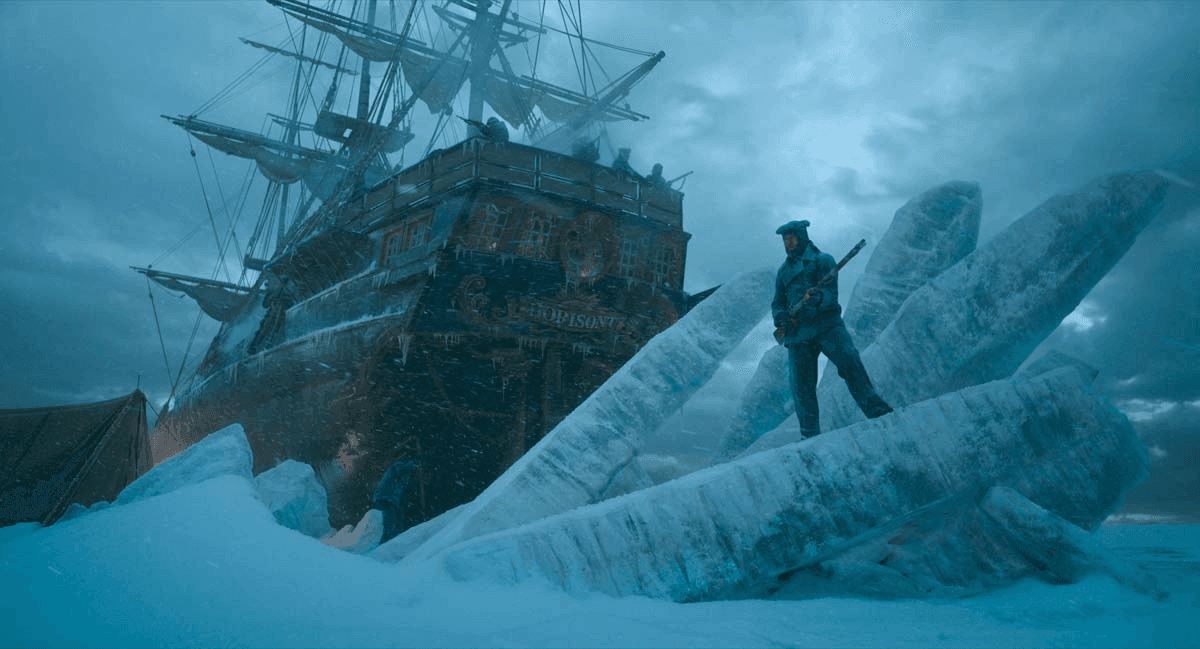
Sailors guard their ice-bound ship from the Creature
In editing there are so many tiny decisions you need to make, and trying to do that asynchronously is like having a conversation sending text messages back and forth. Do you think there is any place for asynchronous work?
It depends on the director and on what you're trying to accomplish that day. The types of edits that Guillermo does make sense to do synchronously, and he wants to be there. Guillermo is incredibly specific, no matter what you ask him. Some directors don't know exactly what they want. They'll come in and be like, “something in these five minutes is bothering me. I don't know what it is.” At that point, asynchronous makes more sense, because you need room to try things that will fail in order to diagnose whatever is bugging your director. But Guillermo often comes in like, “this specific thing is bugging me, let's attack it and fix it together.” And so that is very much a synchronous, real-time task.
The other thing that is really nice about working with Guillermo is that he commits. You don't have to do a bunch of work and then worry that he's going to come in the next day and ask for five other versions.
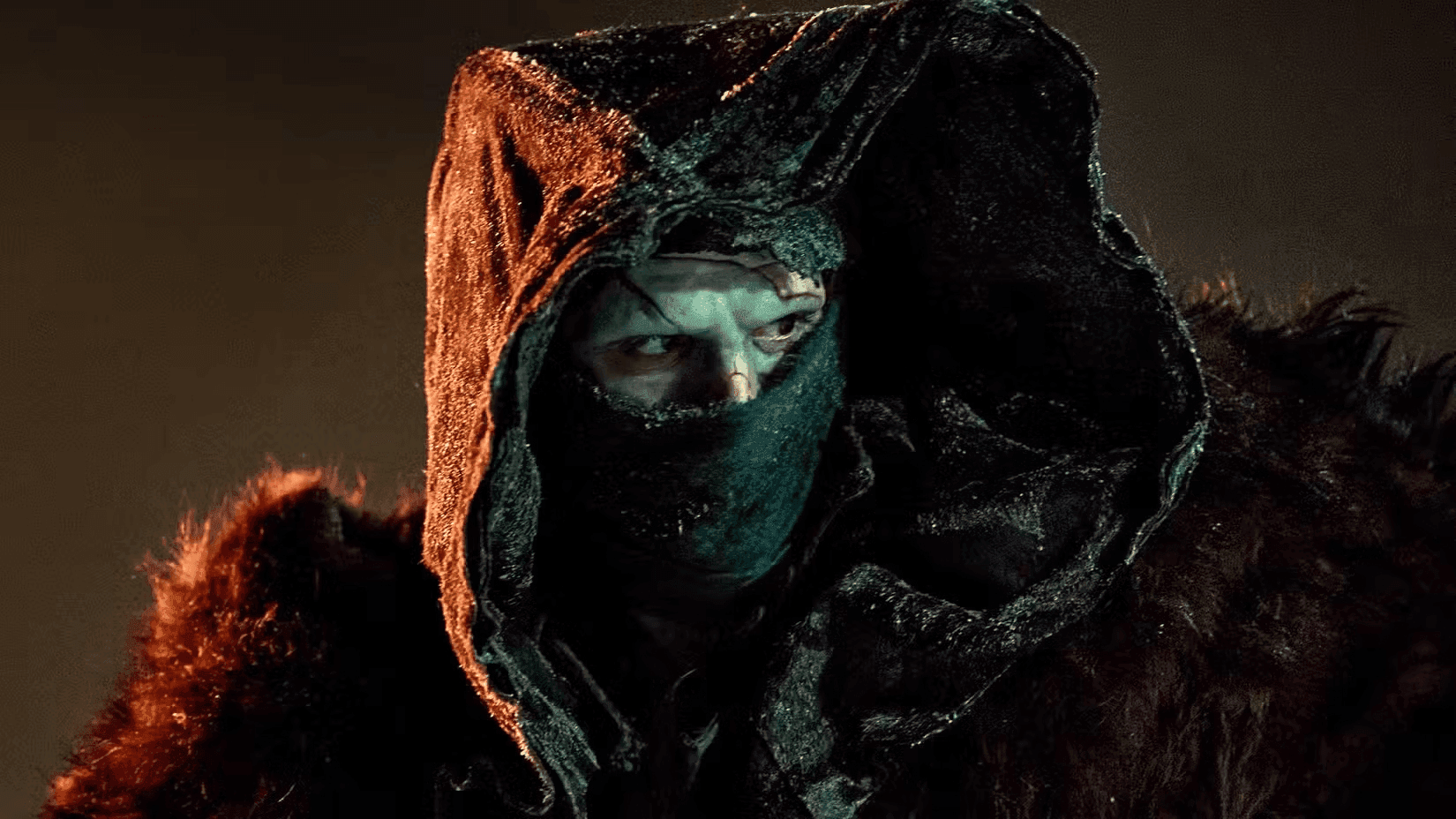
The creature (Jacob Elordi) relentlessly pursues his creator
What is it about editing that you really like?
Editing appeals to things that I'm good at, as well as my desire to control the creation of something until the last possible second. There’s something really satisfying about constructing this thing from all the ingredient pieces and making it feel like a cohesive story that is engaging and dynamic. I've always been a very techie person too, and editing is technology, it's art, it's music, sound, photography. And it's troubleshooting, which is also something that I find I'm pretty good at, in editing and elsewhere. Identifying what is missing, what we need to add, what’s wrong with a particular moment, why it feels incomplete. All of those things come together in editing, it’s the art form that contains all of my interests.
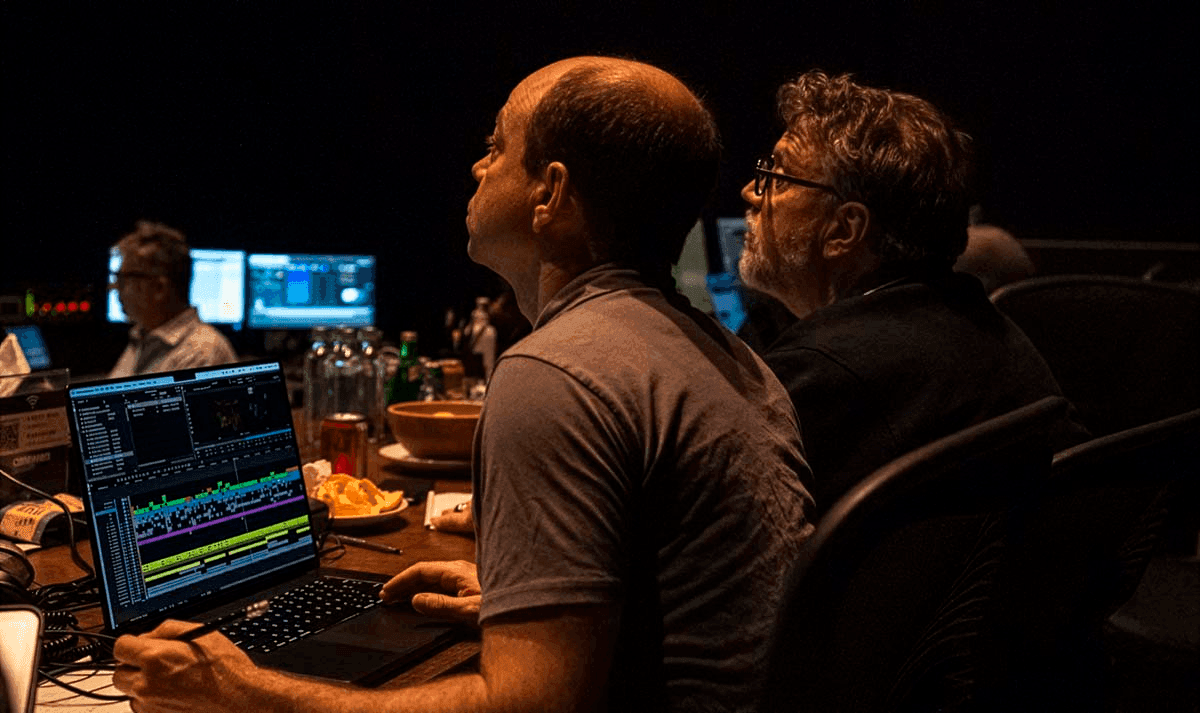
Evan Schiff and Guillermo del Toro on the Formosa mix stage in Toronto
Frankenstein
Director: Guillermo del Toro.Editor: Evan Schiff.First Assistant Editor: Brit DeLillo.First Assistant Editor (Toronto): Luis Freitas. Trainee Assistant Editor (Toronto): Braden Sheets. Main Cast: Oscar Isaac, Jacob Elordi, Mia Goth, Christoph Waltz, Charles Dance, Felix Kammerer , Christian Convery, David Bradley, Lars Mikkelsen.
Editor Evan Schiff used Louper to stream remote live sessions on Frankenstein. See how to set up a livestream for editorial reviews on Avid Media Composer, Premiere Pro, or Resolve.
Stills and trailer from Frankenstein courtesy of Netflix. Behind-the-scenes still photography by Ken Woroner. Photo of Evan Schiff editing in his trailer by Javier Soto. Photo of Evan on the mix stage with Guillermo del Toro by Dennis Berardi. Photo at Abbey Road Studios by Evan Schiff.

Use Louper to stream and collaborate on live shoots, edit sessions, vfx reviews and more - securely and in seriously high quality.

