Technology as a Lens into Personhood: Copy, Save
Technology as a Lens into Personhood: Copy, Save
Director Alyssa Loh and Sound Designer Dennis Dembeck take us inside their latest collaboration on the short film Copy, Save, which premiered at the SXSW Film Festival. They discuss how the sound design taps into the film's themes of isolation, connectedness, and morality in the digital age.
Alyssa, is this film a sort of protest against the perils of future tech?
Alyssa Loh: Technology is a frequent theme in my work. I’m strongly against technology when used in exploitative, anti-human ways, but I’m actually not anti-tech at all. I’m more fascinated by technology as a lens onto personhood. How have these technologies changed how it feels to be with one another? How have they changed how it feels to be inside our own minds? Or, the more radical question in the context of AI is, how have they changed how we think about personhood itself? What makes us…us? Copy, Save is interested in that first set of questions. And Circuit Tilt, my feature in development, takes on the latter.
The bedroom in this film is a sacred space - a cocoon for real connection. When writing Copy, Save, how did you think about physical space in relation to the story?
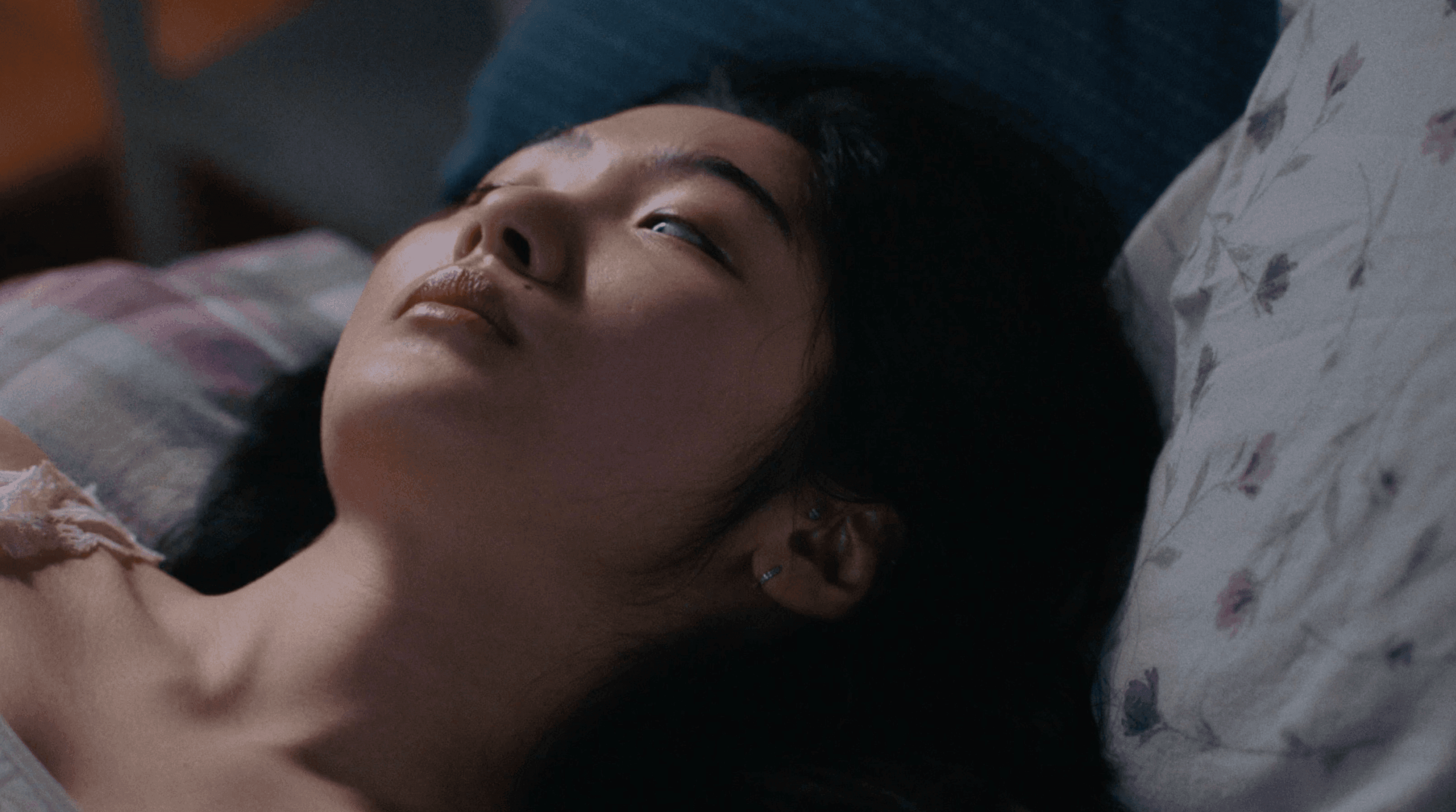
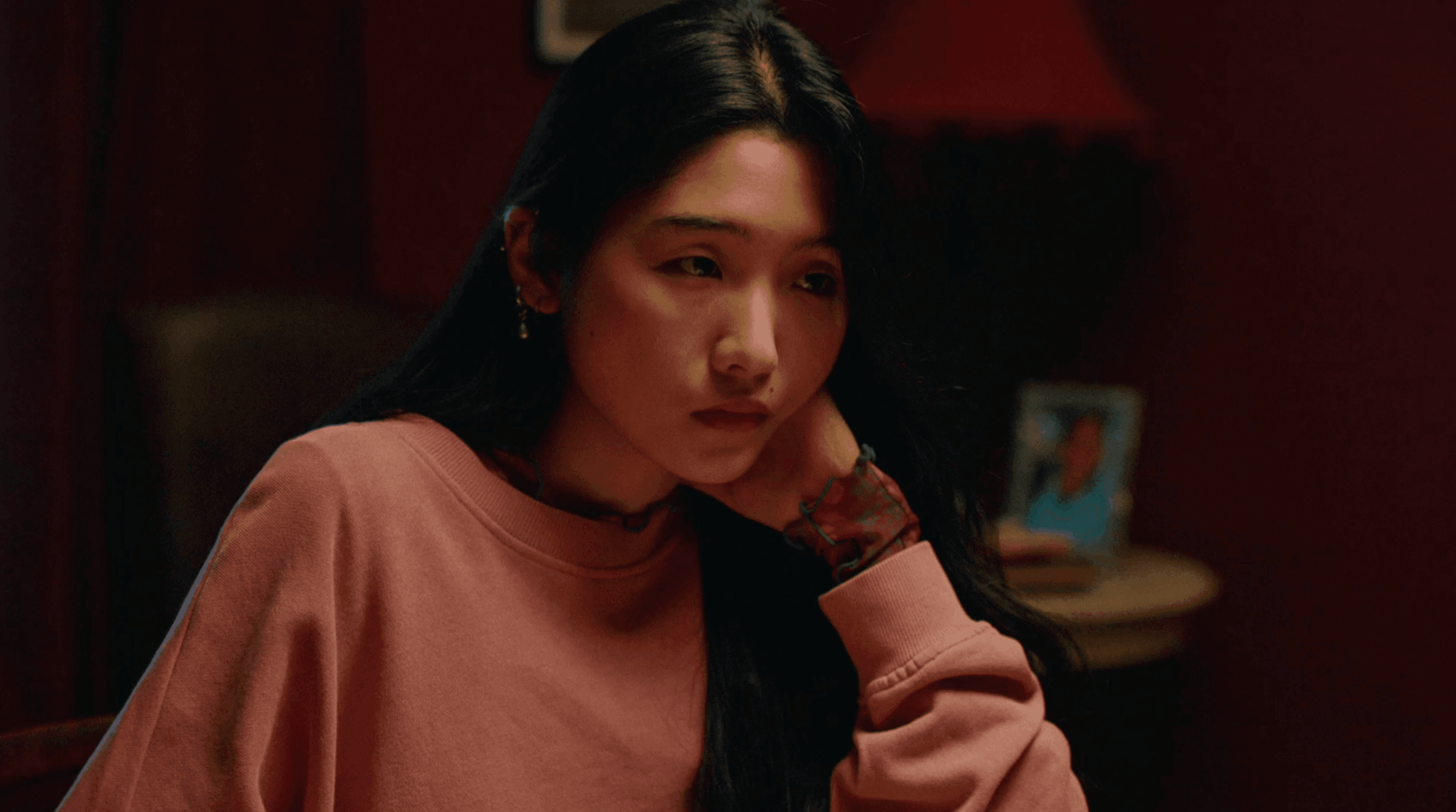
AL: My films have scenes where, after some kind of miscommunication or misconnect, the characters finally talk for real. And that conversation usually takes place in a bedroom. I associate bedrooms with a special kind of privacy, where we can be our true selves. To just exist… as I am.
Bedrooms give you lots of great options as a director as to how to block and light your characters. What conditions allow two people to really talk? What distance? Should they be looking at each other? Could some part of their bodies be in contact?
Dennis, from a sound perspective, how did you support that intimacy or enhance it?
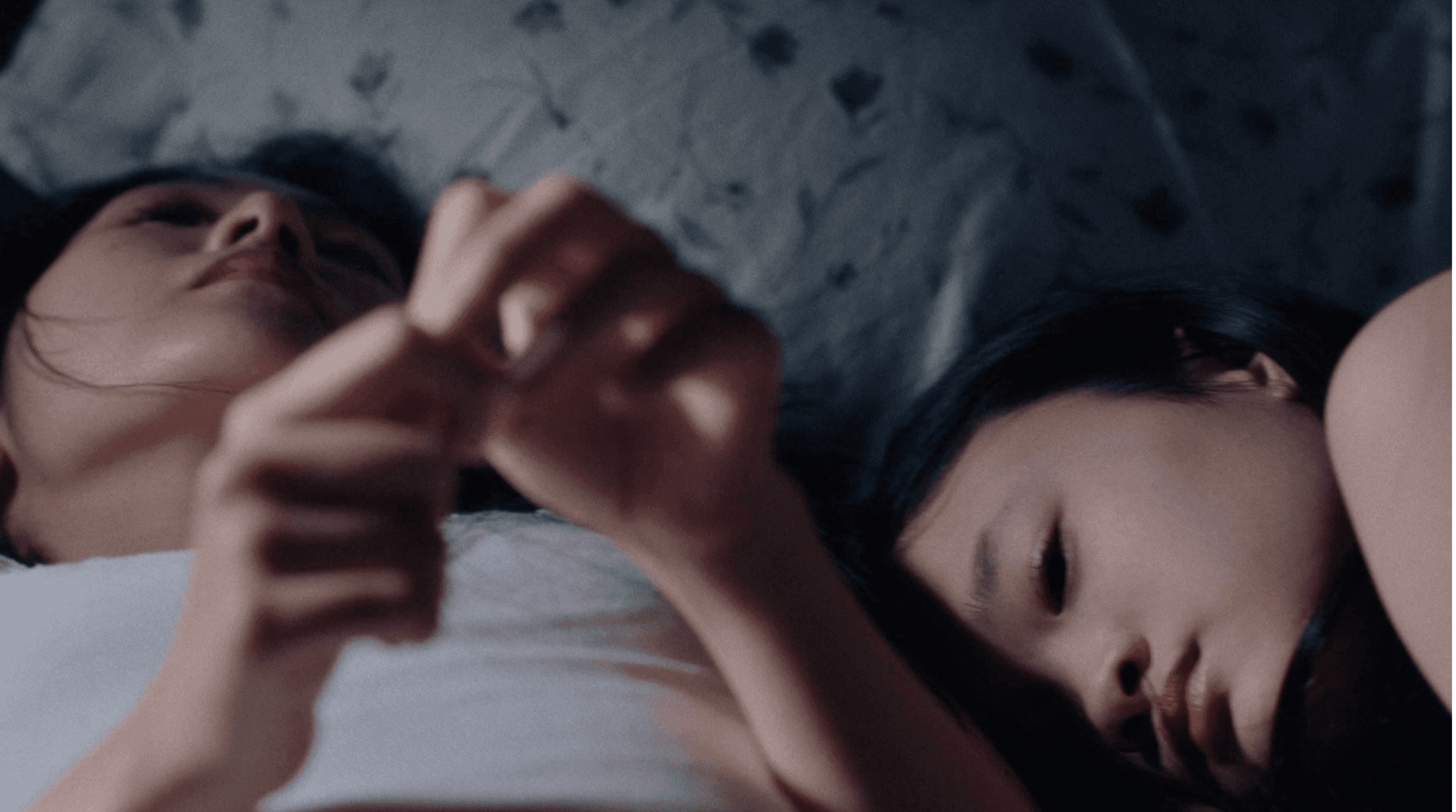
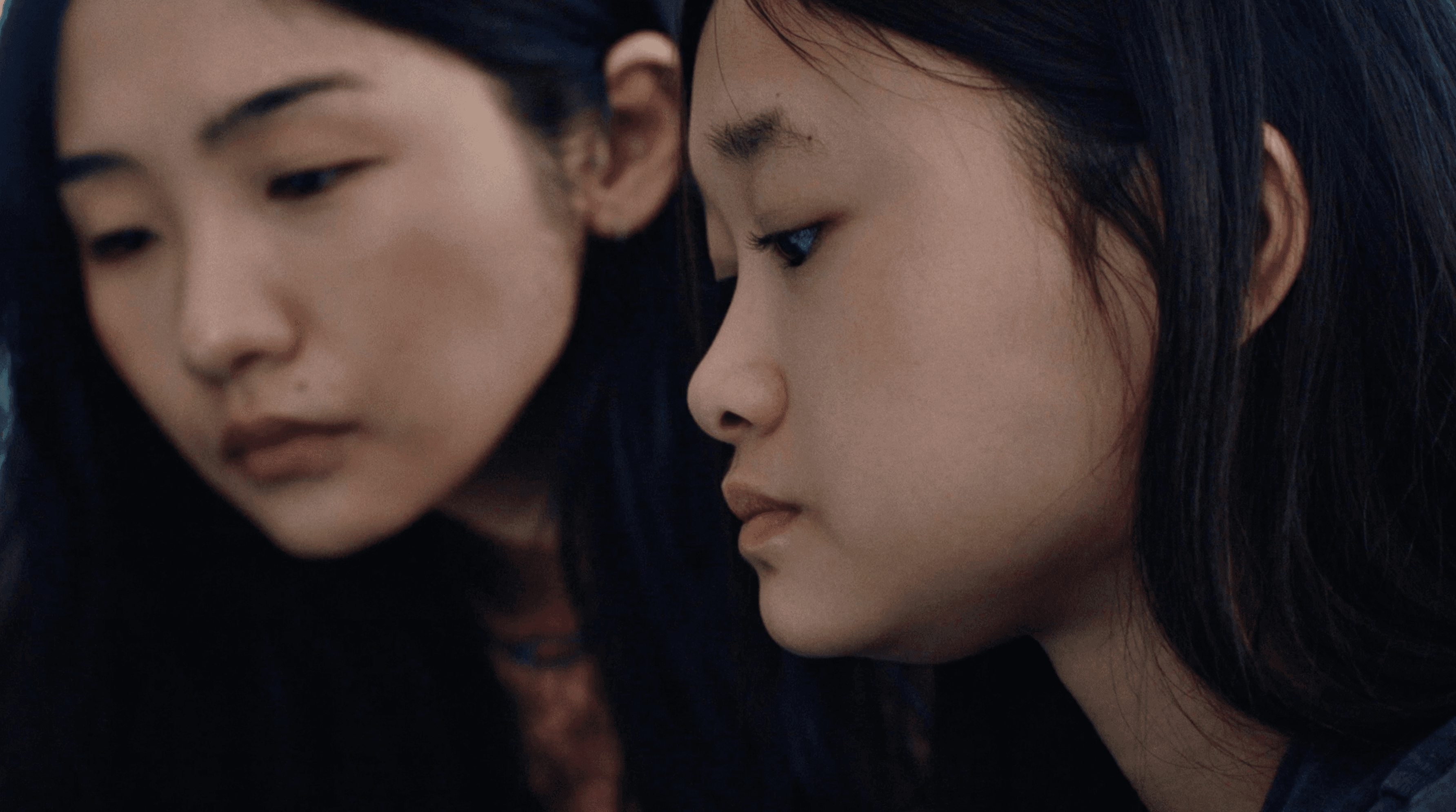
Dennis Dembeck: Alyssa doesn't really like much sound added in. She likes the rawness of what was recorded. It's a very intimate piece, just this closeness between the sisters.
She felt like anything added to the mix was taking away from the intimacy of the actors, so we mainly just relied on what they recorded on set to focus on the dialogue.
The sound in this film is so effective. Can you speak a little about how you used sound to tap into the greater themes of the film?
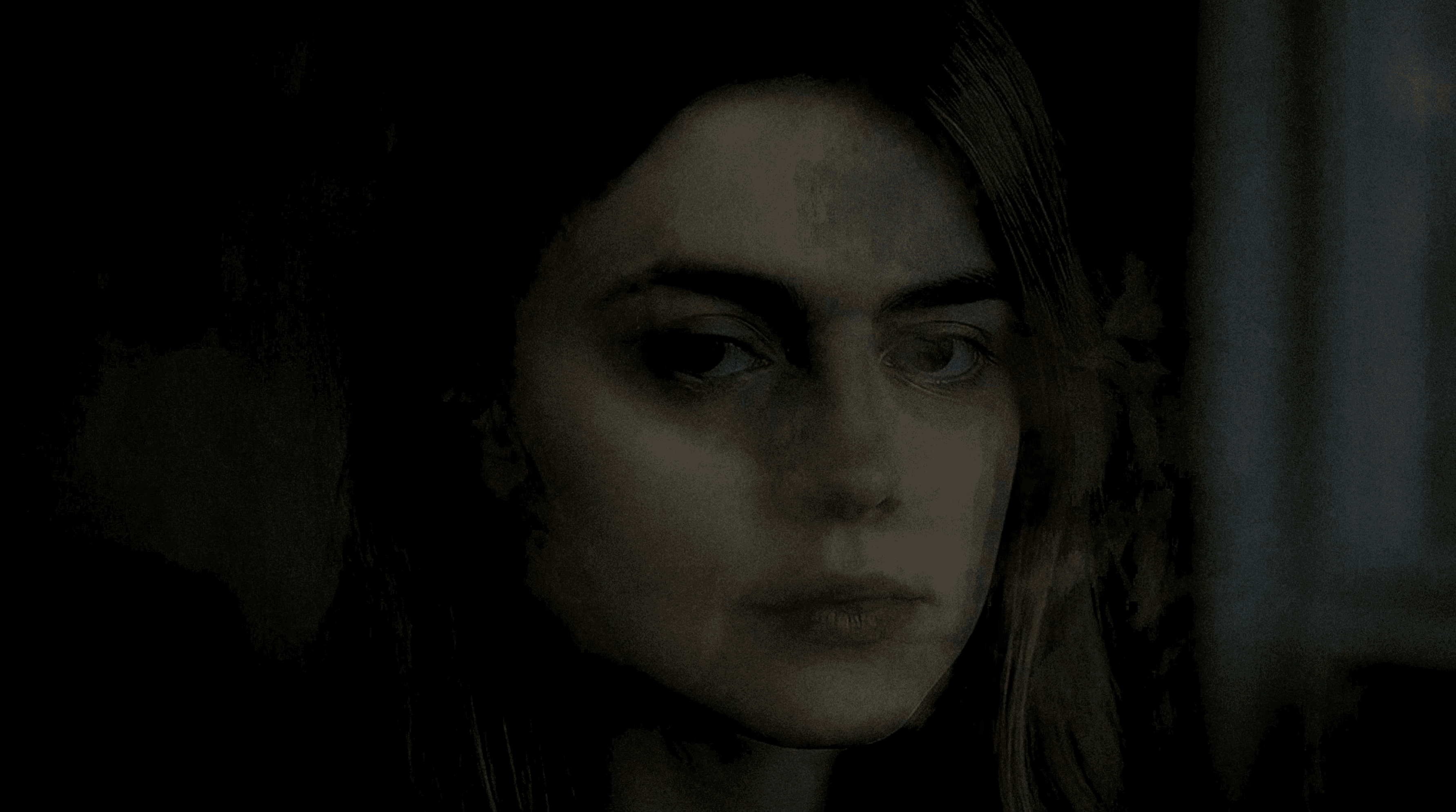
DD: There are three moments that we call ‘the void’, when we go into social media montages.
AL: Yeah, we wanted the sound in these digital spaces to feel placeless. Nowhere and everywhere. So in the first internet sequence, the sound is unnaturally loud, like one’s thoughts; in the second, the voices “float” intermixed in a non-space. In the third, we preserved a lot of the degraded audio of internet videos. How much do our humanity and our relationships depend on embodiment? I am obsessed with this question in my films, and AI and technology are ideal lenses to explore it.
I’m so interested by the way the internet can make us feel isolated and in the crowd at the same time.
The social media montages were chaotic and disjointed - I loved the post within a post technique which creates a sort of visual collage. Alyssa, how did you construct that?
AL: We realized early on that, to achieve the right mix of chaos and cohesion, that sequence could neither be scripted nor random. Rather, it needed a very strict set of rules to guide the connections from shot to shot. I wanted the audience to have an experience in relation to that sequence, not an idea in relation to it…
The sequence flows from the individual (the skydiver, the man mowing his lawn, the first-person-shooter video game, and so on) to the crowd (the people running in the streets, the fight in the restaurant, the mosh pit) to the chorus (the collected footage of people filming clouds on camera-phones, paired with overlapping voices stripped from TikTok and YouTube videos). The chorus is, of course, the synthesis of the individual and the crowd - the transformation of a crowd into one.
So, as the film makes that sudden and radical shift from the story of two individual girls to the story of all of our online lives, we wanted to match that arc through internet footage.
I love stories where someone is suddenly sprung from isolation or loneliness. I am endlessly surprised and moved that we can share connection and intimacy with others, in our minds and bodies.
Alyssa, in your films you explore themes of authenticity and acceptance, and the complexity of female relationships. In Copy, Save, what made you explore this against the backdrop of sisterhood?
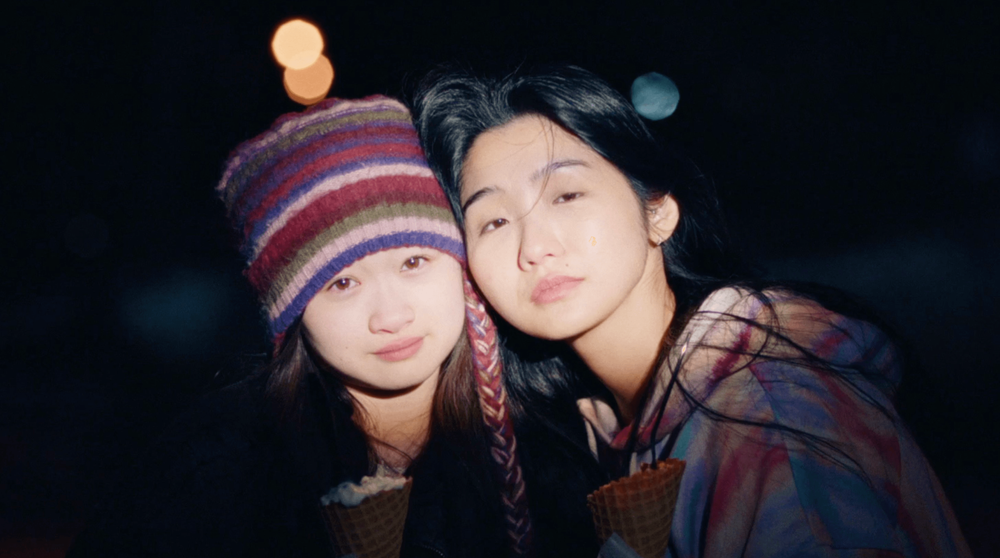
AL: With Copy, Save there are a number of reasons sisterhood felt like the right backdrop. We can be quite different from a sibling, and still very close, which let us explore different moral intuitions around AI technology. A bond with a sister is also so embodied and visceral - a natural contrast to some of the alienations of our digital lives.
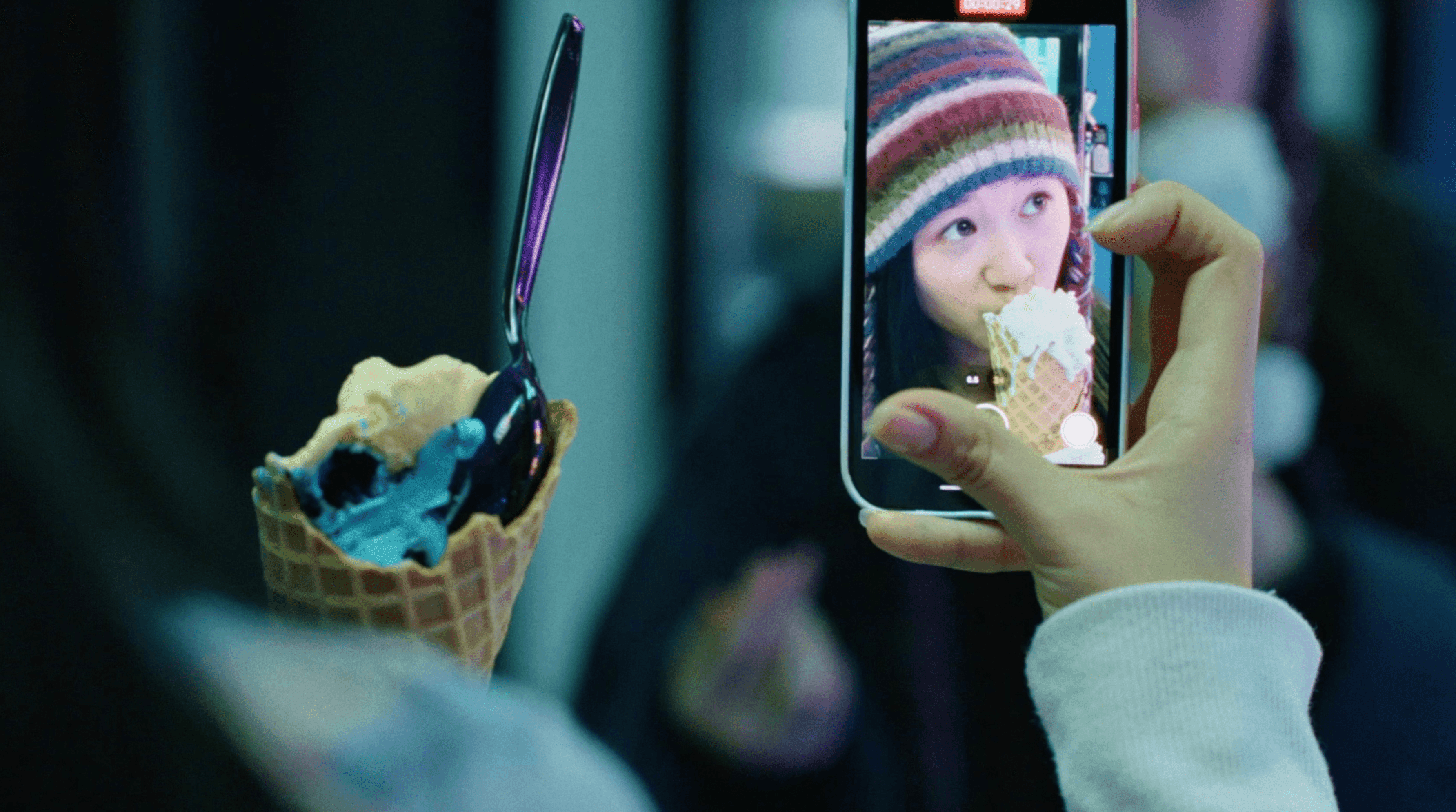
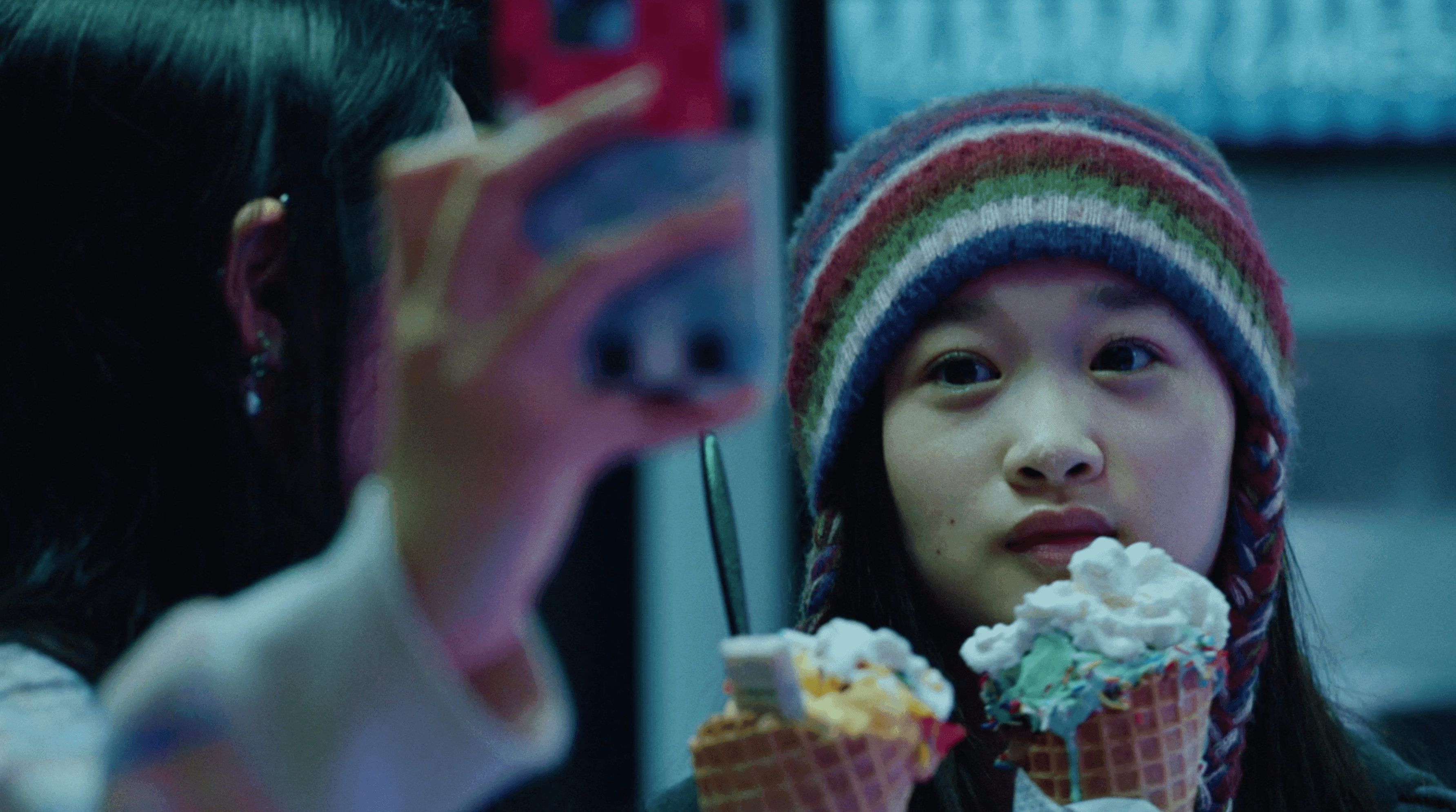
But perhaps the real reason is…I really miss my sister, who lives quite far from me. I was feeling so nostalgic for our teen years together. Which is to say, I was thinking about the relationship between love and the desire to freeze time, and how that desire relates to digital images. The reflex to take out our phones and take a picture; the way our digital images are precisely unlike us - frozen in time.
How was the filmmaking process on this film?
DD: When you’re working on a big feature, there’s a whole sound team and usually your job is to focus on one little aspect. With short films, you're essentially doing everything so it’s a great way to experience every aspect of sound, not only technically but there's a personable part to it: a communication with the director to keep the connection to the film alive.
AL: I personally believe that a director’s clarity of vision can come from the precision of the question at the heart of the film, rather than the certainty of the answer. To me, a director’s task is not that of, say, a 'commander' or 'manager' - it’s not about keeping everyone in line, or dutifully collecting the images laid out in the script.
Rather, for me, directing is a form of radical presence. That’s what creates the conditions, I feel, for collaborators to bring their best work. So I try to keep my question clearly in mind while remaining attuned to what’s unfolding on set - among the actors, the camera, the production design, the lighting, and sound design.
DD: I love working with Alyssa. I hope to keep working with her. I’m in LA and she's based in New York, so Louper’s tools help me keep these relationships going.
Louper was great. It was so easy to just have one software to work with!
Yeah, so how was Louper important for this project?
AL: There are a lot of challenges to doing sound work remotely, so Louper was a huge save for Dennis and me. Louper gives you far more control over, for instance, the playback volume, and allows you to achieve much better sound and image sync than conventional screen-sharing platforms. Most screen-sharing platforms have terrible video lag for one of the participants - a total non-starter for sound design work! Through Louper, Dennis and I were able to fine-tune the sound levels and sound effect details from opposite sides of the U.S.
DD: Previously I was using Zoom and Audiomovers, but there were always problems with sync because it's two different pieces of software. But switching to Louper was great. It was just so easy to have everything in one software.
Dennis Dembeck is a sound designer based in LA. He used Louper to livestream the mix for Copy, Save out of Pro Tools, for remote sessions with director Alyssa Loh. See how to set up a Louper livestream from Pro Tools here.
Copy, Save had its world premiere at SXSW 2026.
Written & directed by Alyssa Loh. A Madhouse Films Production. Starring: Venice Wong, Sheng Wen. Digital Avatar Actress: Alexa Mareka. Produced by: Katherine Romans, Charlie Traisman, Jessica Li. DP: Melanie Akoka. Editors: Alyssa Loh , Melanie Akoka. Sound Design & Mix: Dennis Dembeck.
Filmed with support of CHANEL and Tribeca.
All film stills courtesy of Copy, Save.

Use Louper to stream and collaborate on live shoots, edit sessions, vfx reviews and more - securely and in seriously high quality.

